


Introduction
Hosting guests in your living room should feel effortless, but poor furniture arrangement often creates the opposite experience-awkward conversations, blocked pathways, and uncomfortable seating that makes everyone want to leave early. The difference between a successful gathering and a stressful one often comes down to how you arrange your furniture. Whether you're working with a compact apartment or a spacious family room, the right layout transforms your space into a welcoming environment where guests naturally relax, conversation flows easily, and movement feels intuitive. This guide presents 7 proven living room layout ideas for hosting guests comfortably, each designed for specific room sizes, furniture types, and entertaining styles.
Layout Idea 1: The Conversation Square - Best for Balanced Group Hosting
Best for: Medium rooms (14×16 to 16×18 feet), dinner parties, 6-8 guests who want equal participation
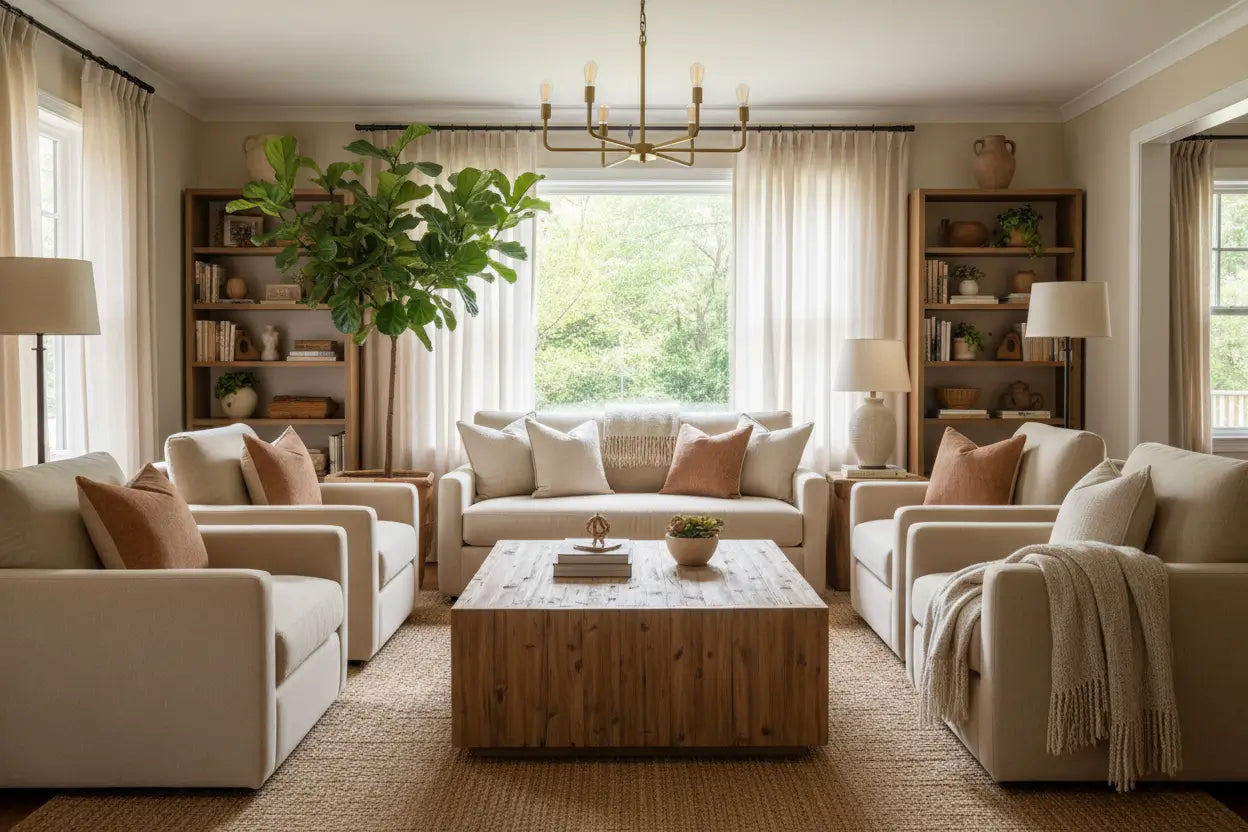
The conversation square arranges seating on all four sides of a central coffee table, creating equal sightlines and inclusive interaction for every guest.
How to arrange it:
Position an 84-90 inch sofa along one wall. Place a loveseat or two chairs directly opposite, 6-7 feet away. Add two accent chairs on the remaining sides. Center a rectangular coffee table (48×30 inches) in the middle.
Key measurements:
- Sofa to opposite seating: 6-7 feet
- Coffee table clearance: 14-18 inches from all seating
- Side walkways: 30-36 inches minimum
Why it works:
Every guest can see every other guest without awkward head-turning. The square eliminates the "head of the table" dynamic-no one feels like they're leading or excluded from the conversation. This layout naturally encourages group discussion rather than side conversations.
Pro tip: Keep the square tight. If opposite seating exceeds 8 feet apart, conversations fracture into separate pairs. Intimacy matters more than symmetry-aim for 6-7 feet between facing pieces.
Layout Idea 2: The Angled L-Shape - Best for Small Living Rooms
Best for: Small rooms (10×12 to 12×14 feet), apartments, 4-5 guests, intimate gatherings
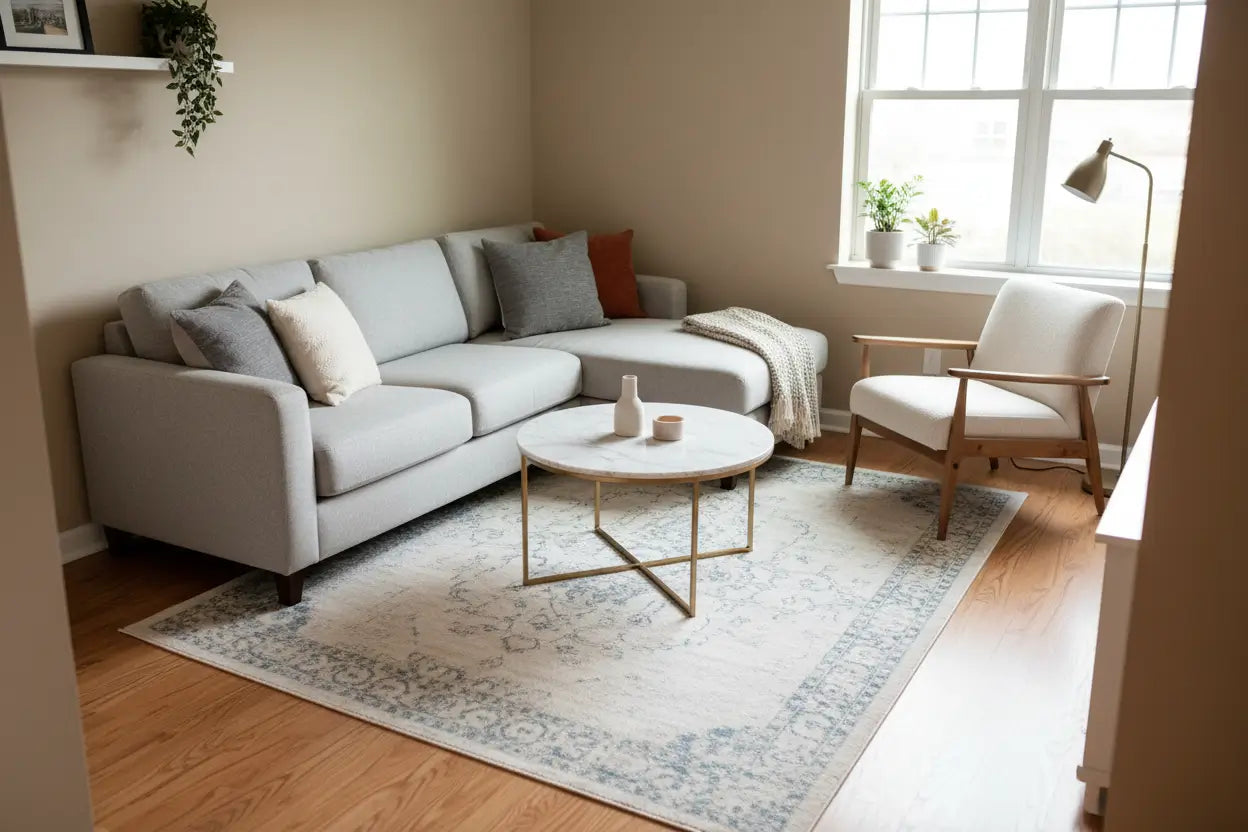
The angled L-shape positions a sofa along one wall with chairs angled 30-45 degrees toward it, maximizing seating capacity without overwhelming compact spaces.
How to arrange it:
Place a 72-78 inch sofa along the longest wall. Position two armless accent chairs at 30-45 degree angles facing the sofa's center. Use a small round coffee table (30-36 inches diameter).
Key measurements:
- Sofa length: 72-78 inches maximum
- Chair angle: 30-45 degrees inward
- Minimum floor clearance: 24 inches on all walkways
Why it works:
Angling chairs inward dramatically improves sightlines in tight spaces. Guests on the sofa can see both chair occupants clearly, and chair guests can see each other across the coffee table. The angled arrangement also creates visual interest and makes the room feel less boxy.
Pro tip: Skip the loveseat in small rooms-it consumes too much space for the seating it provides. Two angled armless chairs give you the same capacity with better traffic flow and a lighter visual footprint.
Layout Idea 3: The Floating Island - Best for Large Open Spaces
Best for: Large rooms (18×20 feet and up), open-plan spaces, 8-12 guests, formal entertaining
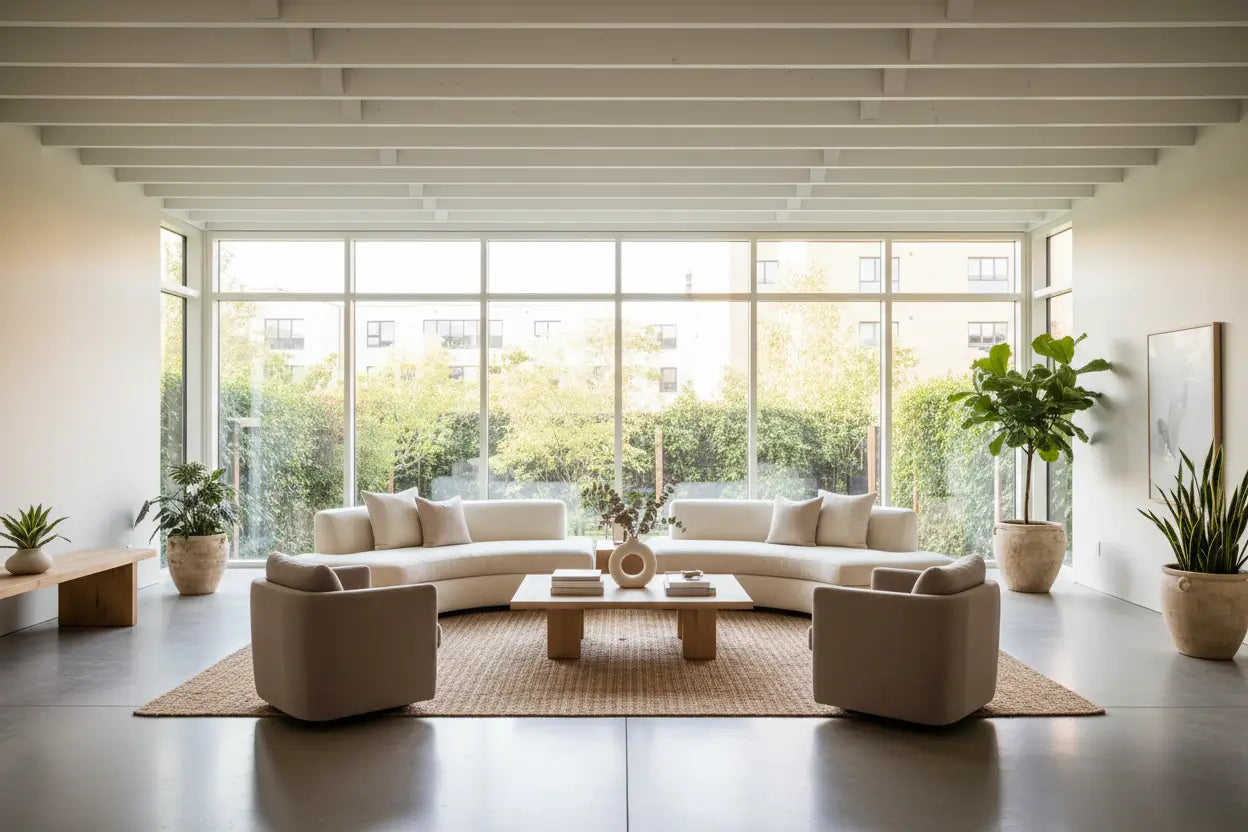
The floating island pulls all seating away from walls into the room's center, creating an intimate gathering space within a large room and preventing the "empty stadium" effect.
How to arrange it:
Float a large sectional or 96+ inch sofa 18-24 inches from the back wall. Position a loveseat or three chairs opposite, 7-8 feet away. Add two chairs on the open sides. Place a large coffee table (54×36 inches) in the center.
Key measurements:
- Clearance behind sofa: 18-24 inches from wall
- Opposite seating distance: 7-8 feet
- Minimum room width needed: 15 feet
Why it works:
Floating furniture creates defined zones in oversized rooms. The seating cluster feels intimate despite the room's size, while the space behind the sofa becomes a natural pathway or service area for drinks and appetizers.
Pro tip: Use the wall space behind a floated sofa strategically-add a console table for drinks, snacks, or floral arrangements. This transforms dead space into functional hosting surface area and creates a natural bar zone.
Layout Idea 4: The Open U-Shape - Best for Conversation-Focused Hosting
Best for: Medium rooms (14×18 to 16×20 feet), 7-9 guests, groups that prioritize conversation
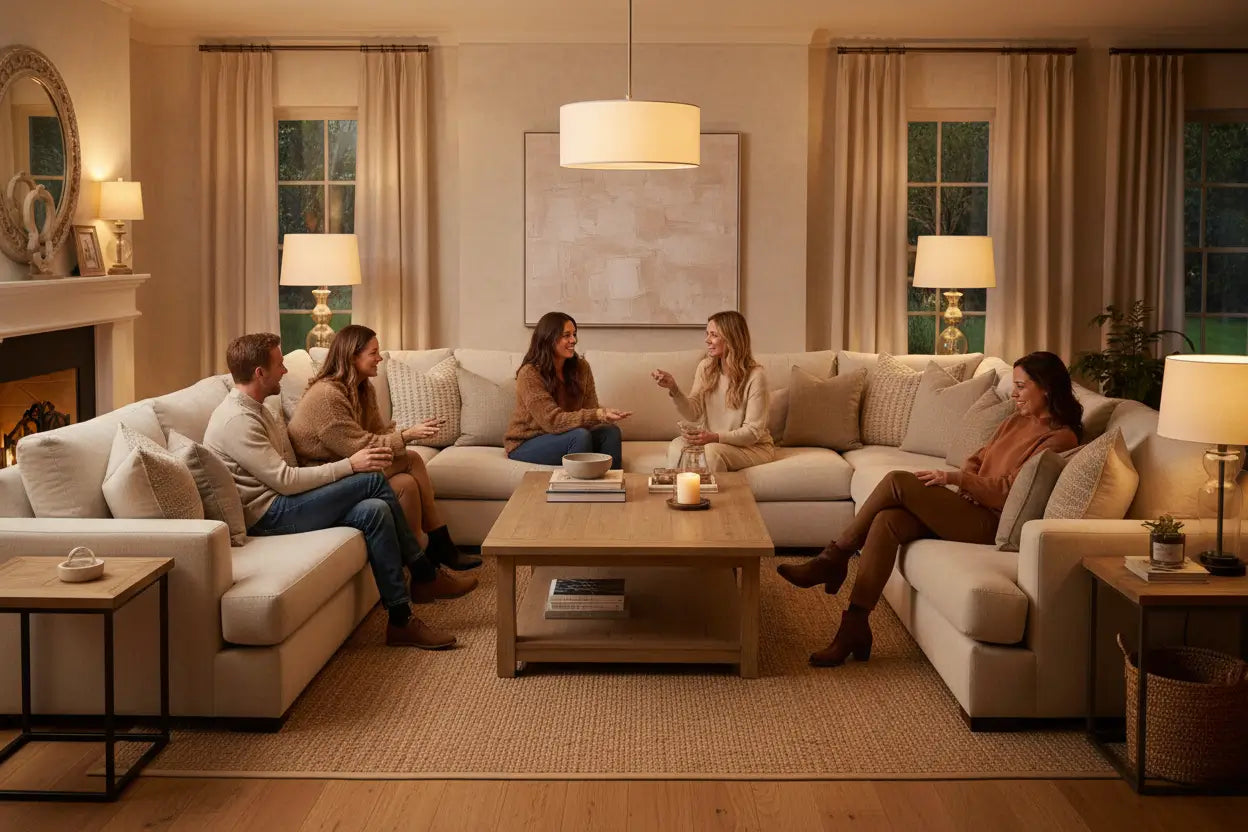
The open U-shape arranges seating on three sides with one side left open, creating an inclusive conversation horseshoe that balances intimacy with easy access.
How to arrange it:
Place an 84-90 inch sofa along the main wall. Extend one loveseat or two chairs from each end, pointing toward the room's center. Leave the fourth side completely open, facing the room's entrance or focal point.
Key measurements:
- Back sofa: 84-90 inches
- Each arm: 60-72 inches (loveseat or 2 chairs)
- U opening: 5-6 feet wide minimum
Why it works:
The U creates a natural conversation pit where everyone faces inward, but the open end prevents the trapped feeling of a closed square. Guests can easily enter and exit without climbing over furniture or disrupting others.
Pro tip: The U's opening must face the room's main traffic pattern-never a wall. If you close the U toward a wall, guests must squeeze around furniture arms to enter. Position the opening toward your room's focal point (fireplace, window, or garden door).
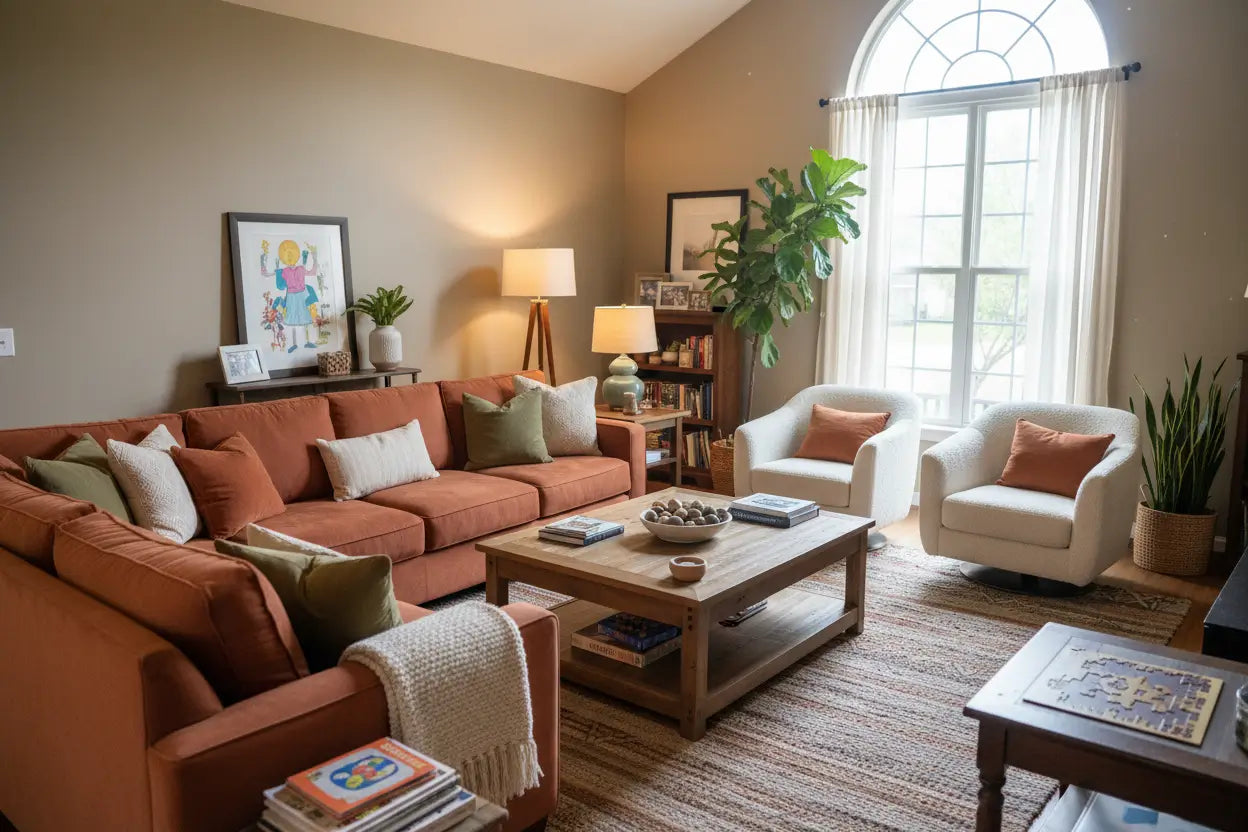
Layout Idea 5: The Sectional + Chairs Hybrid - Best for Family Hosting
Best for: Family rooms, casual entertaining, households with children, 8-10 guests
The sectional + chairs hybrid combines a sectional's high seating capacity with individual chairs' flexibility, creating adaptable arrangements for varying group sizes and formality levels.
How to arrange it:
Position an L-shaped sectional (seats 4-5) as your primary seating-either in a corner or floated. Add 2-3 accent chairs opposite the sectional's longer section. Angle chairs slightly inward (15-30 degrees) for better sightlines.
Key measurements:
- Chairs to sectional: 6-7 feet
- Chair angle: 15-30 degrees inward
- Coffee table: 48×36 inches or two smaller tables
Why it works:
The sectional provides casual, high-capacity seating for family and close friends. Individual chairs add formality and flexibility-they can be moved for different occasions, pulled to the dining table when needed, or angled to accommodate different group sizes.
Pro tip: Choose a sectional with a chaise on one end rather than a corner seat. The chaise becomes premium seating for elderly guests or anyone who wants to elevate their feet, while corner seats often feel cramped and awkward during conversations.
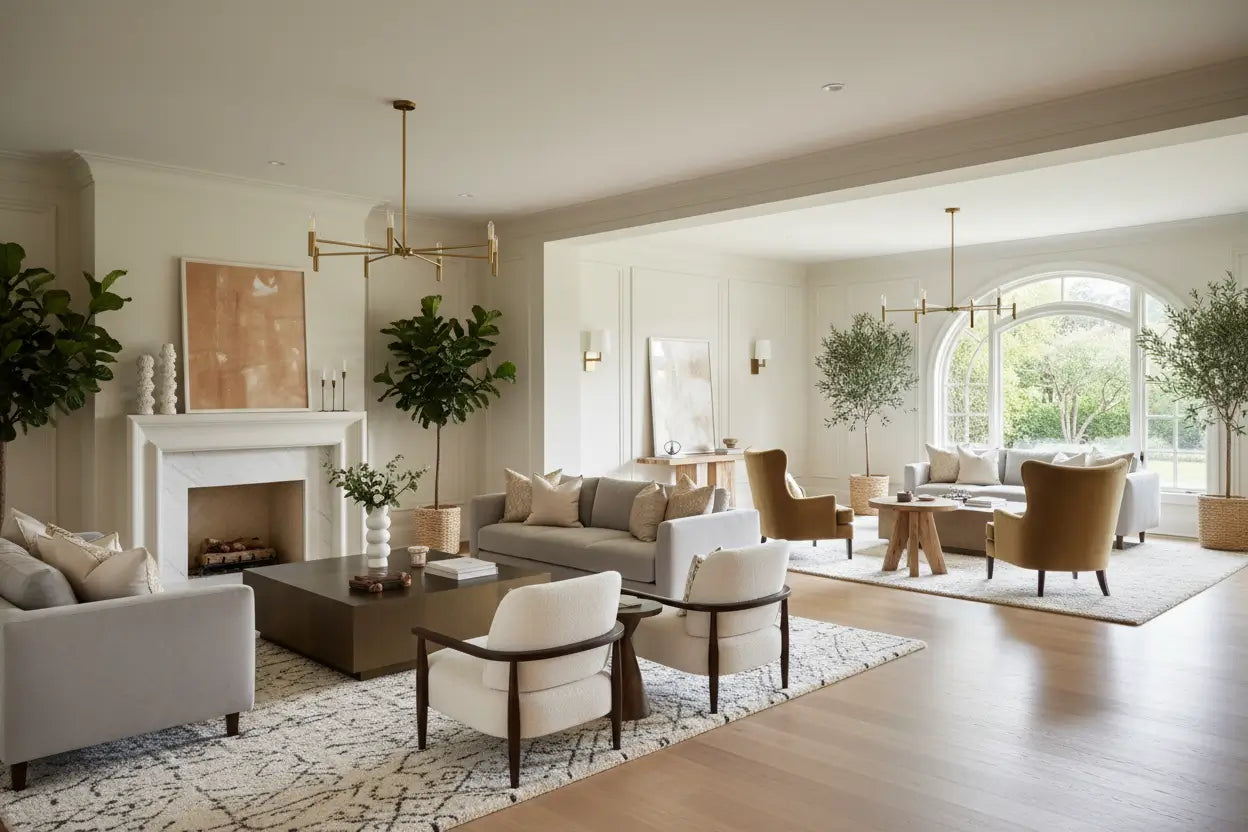
Layout Idea 6: The Dual Zone Split - Best for Large Groups
Best for: Very large rooms (20×22 feet and up), 10-15 guests, multi-generational gatherings
The dual zone split creates two separate conversation areas within one room, each with its own seating cluster, allowing multiple conversations without overcrowding or noise overlap.
How to arrange it:
Create a primary zone with a sectional or sofa + 2 chairs (seats 5-6). Position a secondary zone 8-10 feet away with a loveseat + 2 chairs (seats 4-5). Define each zone with its own area rug and coffee table.
Key measurements:
- Distance between zones: 8-10 feet
- Each zone's rug: Front furniture legs on rug
- Cross-zone sightlines: Maintain visual connection
Why it works:
Large groups naturally fragment into smaller conversations-adults vs. kids, different generations, or different interest groups. Two defined zones acknowledge this reality while keeping everyone in the same room. Guests can easily move between zones without disrupting either conversation.
Pro tip: Don't place zones too far apart (12+ feet). Guests will feel isolated in separate rooms. Keep zones close enough that someone can participate in both conversations by simply turning their chair or moving a few steps.
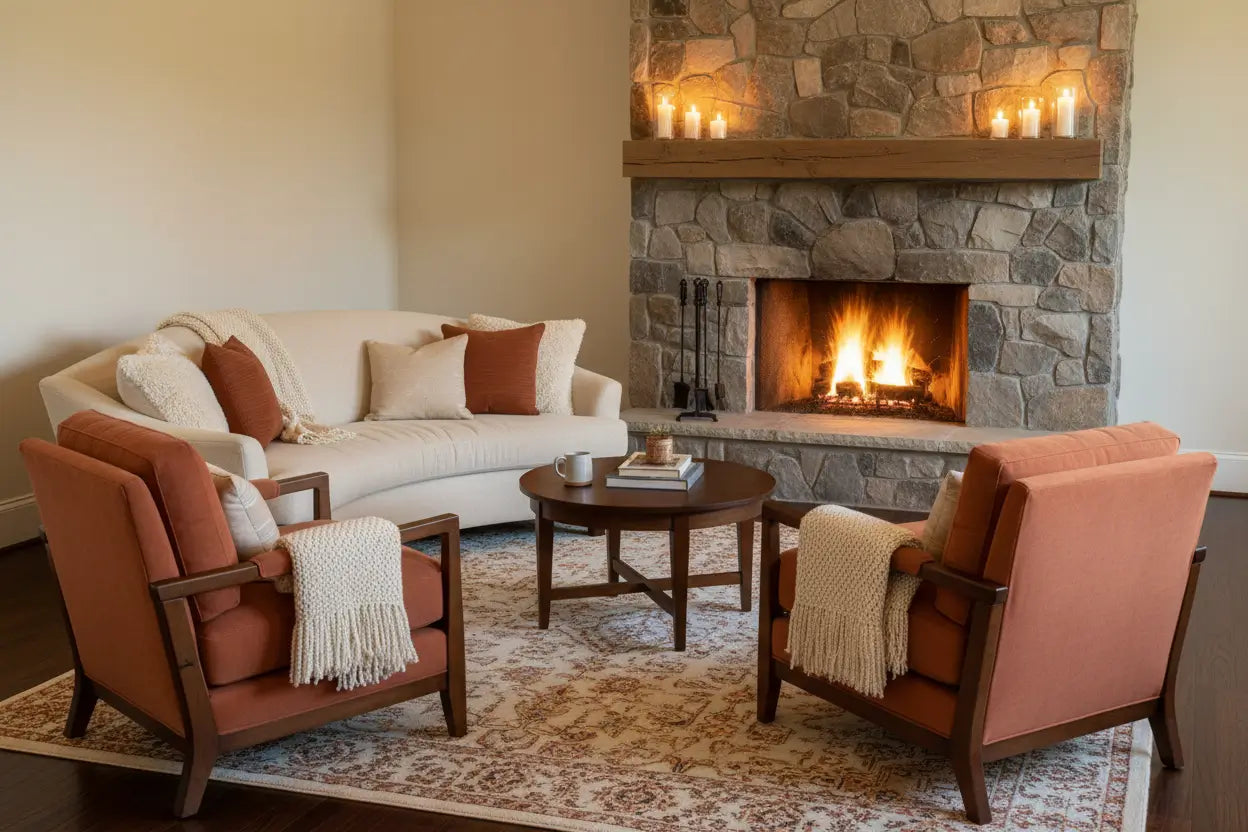
Layout Idea 7: The Fireplace Crescent - Best for Cozy Intimate Hosting
Best for: Rooms with fireplaces, fall/winter hosting, 6-8 guests, multigenerational groups
The fireplace crescent curves seating in a gentle arc facing the fireplace, creating a cozy focal point that combines warmth, conversation, and visual interest.
How to arrange it:
Arrange your sofa and chairs in a shallow curve facing the fireplace. Position the sofa directly opposite the hearth with chairs angled 15-20 degrees on each side, creating a crescent shape that opens toward the fire.
Key measurements:
- Sofa to hearth: 4-6 feet minimum (fire safety)
- Chair angle: 15-20 degrees inward
- Crescent opening: 120-150 degrees total arc
Why it works:
The fireplace becomes a natural conversation anchor-guests have something to look at during pauses, and the warmth creates physical comfort. The crescent shape maintains conversation geometry while orienting toward the focal point, making the arrangement feel intentional and cozy.
Pro tip: Don't center the crescent symmetrically. Place the longest seating section (sofa) slightly off-center toward the room's main entry. This creates a natural "host seat" and leaves the fireplace view unobstructed from the doorway.
How to Choose Living Room Layout Ideas for Hosting Guests Comfortably
| Number of Guests | Recommended Layout | Room Size Needed | Key Feature |
| 4-5 guests | Angled L-Shape | 10×12 to 12×14 feet | Intimate, space-efficient |
| 6-8 guests | Conversation Square | 14×16 to 16×18 feet | Equal participation for all |
| 6-8 guests (fireplace) | Fireplace Crescent | 14×16 to 16×18 feet | Cozy focal point |
| 7-9 guests | Open U-Shape | 14×18 to 16×20 feet | Easy entry/exit |
| 8-10 guests | Sectional + Chairs Hybrid | 16×18 to 18×20 feet | Casual + flexible |
| 8-12 guests | Floating Island | 18×20 feet and up | Intimate in large space |
| 10-15+ guests | Dual Zone Split | 20×22 feet and up | Multiple conversation areas |
Common Layout Mistakes That Ruin Guest Comfort
Avoid these frequent errors that make hosting awkward and uncomfortable.
Mistake 1: Pushing All Furniture Against Walls
Why it fails: Creates a "bowling alley" effect with too much empty space in the center and seating too far apart for conversation.
The fix: Float your sofa 12-24 inches from the wall in medium and large rooms. This creates depth, improves traffic flow behind the sofa, and brings seating into a more intimate arrangement.
Mistake 2: Orienting Everything Toward the TV
Why it fails: Guests end up sitting side-by-side staring at a screen instead of facing each other for conversation.
The fix: Position seating to face each other first, then angle toward the TV as a secondary consideration. If you must prioritize TV viewing, add swivel chairs that can rotate toward the screen or toward other guests.
Mistake 3: Blocking Natural Traffic Patterns
Why it fails: Guests constantly navigate around furniture, interrupt conversations by walking through seating areas, or avoid certain parts of the room entirely.
The fix: Observe how people naturally move through your space. Keep main pathways clear (36 inches minimum). If your layout forces people to walk between the sofa and coffee table, redesign it.
Mistake 4: Using Furniture That's Too Large or Too Small
Why it fails: Oversized furniture overwhelms the space and restricts movement. Undersized furniture looks lost and doesn't provide adequate seating.
The fix: Follow the 2/3 rule-your sofa should be approximately 2/3 the length of the wall it's on. In a 14-foot room, use an 84-96 inch sofa, not a 72-inch loveseat or a 108-inch sectional.
Mistake 5: Creating Seating Without Surfaces
Why it fails: Guests have nowhere to set drinks, plates, or personal items, leading to awkward balancing acts or spills.
The fix: Ensure every seat is within arm's reach of a surface-coffee table, side table, or ottoman. Use nesting tables or C-tables that slide under furniture for flexible surface space.
Mistake 6: Ignoring Conversation Distance
Why it fails: Seating placed more than 8 feet apart makes guests strain to hear each other. Seating closer than 4 feet feels uncomfortably intimate for acquaintances.
The fix: Measure the distance from the front edge of your sofa to opposite seating. Aim for 4-8 feet. Adjust furniture placement to hit this sweet spot.
Mistake 7: Neglecting Lighting for Different Moods
Why it fails: Harsh overhead lighting feels institutional. Insufficient lighting makes the space unwelcoming and makes it hard for guests to see each other.
The fix: Use layered lighting-combine overhead fixtures with table lamps, floor lamps, and accent lighting. Install dimmers on overhead lights. Aim for 3-5 adjustable light sources in your seating area.
Conclusion
Creating living room layout ideas for hosting guests comfortably comes down to three core principles: positioning seating 4-8 feet apart for natural conversation, maintaining clear traffic pathways of at least 30 inches, and arranging furniture to encourage face-to-face interaction. Whether you choose a conversation square for balanced hosting, an angled L-shape for small spaces, or a dual zone split for large groups, these 7 layouts provide proven frameworks that transform your living room into a welcoming space where guests naturally relax and connect.
If you're looking for furniture that combines hosting-friendly design with lasting comfort and style, Magic Home offers thoughtfully recliner sofa, and seating collections specifically crafted for homes where gathering and entertaining are priorities.
FAQ: Living Room Layout Ideas for Hosting Guests Comfortably
Q: What is the ideal distance between a sofa and chairs for comfortable conversation?
Q: How much space should I leave for walkways in my living room when hosting?
Main walkways need 30-36 inches minimum (enough for two people to pass comfortably), while secondary paths require 24-30 inches. Leave 14-18 inches between your coffee table and sofa-close enough to reach but far enough to walk past without turning sideways.
if you want to learn more, please check out Sofa Size Guide: Dimensions, Measurements & Calculator
Q: Should I float my sofa or push it against the wall when hosting guests?
Q: What's the best living room layout for small spaces when hosting guests?
Use an angled L-shape layout: place a 72-78 inch sofa along the longest wall with two armless accent chairs angled 30-45 degrees toward it. Use a small round coffee table (30-36 inches). This arrangement seats 4-5 guests comfortably without overwhelming the space and improves sightlines dramatically.
Please see our Small Living Room Layout Ideas with a Reclining Sofa for more details.


