


Zero Gravity Recliner vs Adjustable Recliner: Key Differences You Need to Know Before You Buy

Introduction: Two Recliners, One Important Choice
You're shopping for a recliner and you've narrowed it down to two types: zero gravity or adjustable. Both promise comfort. Both recline. So what's actually different - and does the distinction really matter?
It does, significantly. The wrong choice can mean spending hundreds of dollars on a chair that doesn't address your back pain, fights your living room layout, or leaves you awkwardly angled for TV watching. This guide gives you a direct, practical comparison of the best zero gravity recliner vs adjustable recliner options - covering angles, ergonomics, health benefits, space requirements, and price - so you can buy with confidence.
What Is a Zero Gravity Recliner?
A zero gravity recliner is engineered around the neutral body position - the posture NASA developed for astronauts to minimize gravitational stress during launch. In this position, the knees are elevated above the heart, the spine maintains its natural curve, and body weight is distributed evenly across the seat and backrest.
The result is reduced compression on lumbar discs, lower muscle tension, and improved venous circulation - all achieved through a specific reclining angle of approximately 120-130 degrees, combined with elevated leg support.
Defining Features
- Leg rest that elevates feet above heart level
- Recline angle optimized for the neutral body position (~120-130°)
- Contoured lumbar and neck support for spinal alignment
- Available in manual or power operation
- Often includes heat, massage, or air compression add-ons
if you want to learn more, please see our Is a Zero Gravity Reclining Sofa Worth It?

What Is an Adjustable Recliner?
An adjustable recliner is a broad category covering any chair that lets you recline the backrest and raise a footrest across multiple positions. From gently leaned back to nearly flat, the goal is flexible positioning rather than a single optimized angle.
Adjustable recliners are the classic living room staple - comfortable, versatile, available in nearly every style and material, and sold at every price point. Modern versions increasingly include power motors, USB charging ports, and integrated massage functions.
Defining Features
- Wide reclining range- from slightly back to near-flat
- Separate or synchronized footrest and backrest controls
- Manual lever, push-back, or power motor configurations
- Broad style variety- traditional, contemporary, sectional, swivel
- Lower entry-level price vs comparable zero gravity models
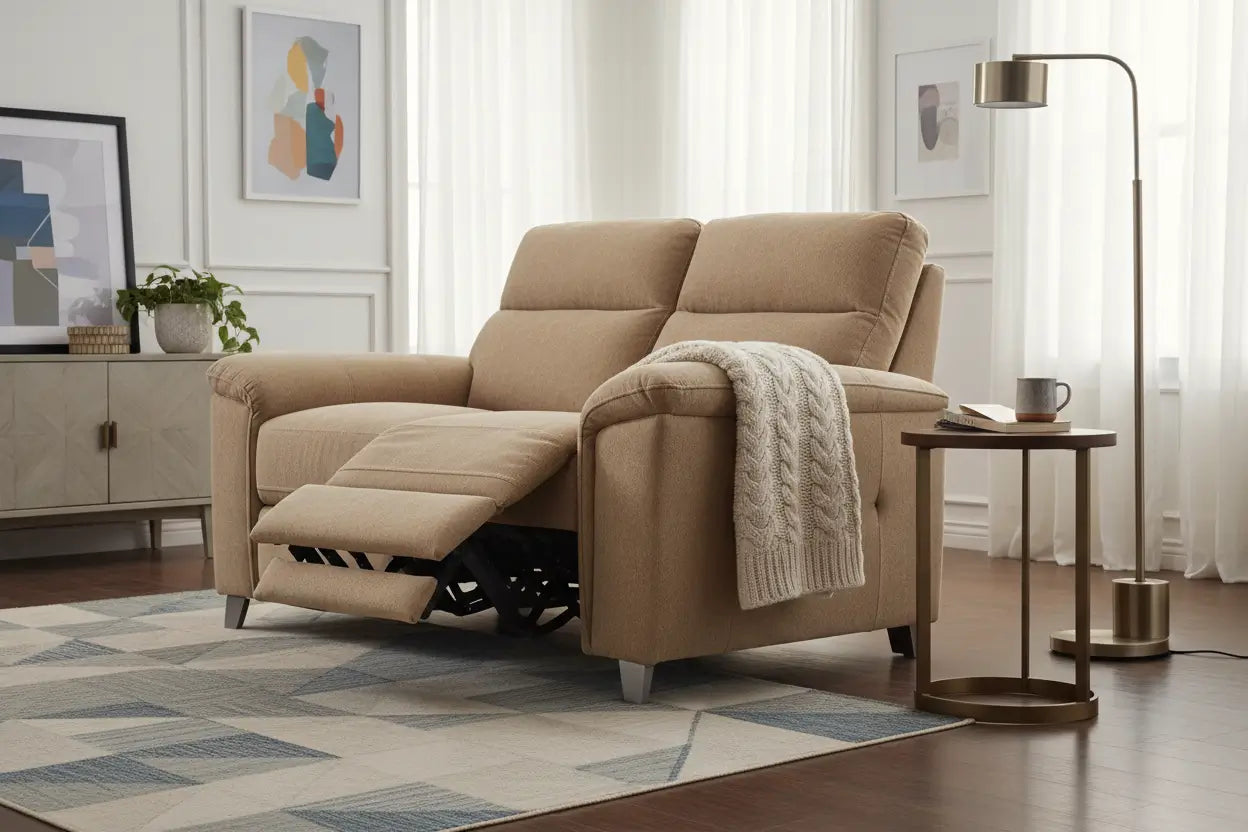
Best Zero Gravity Recliner vs Adjustable Recliner: Side-by-Side Comparison
The table below compares both types across every dimension that matters to real buyers. Winning advantages are shown in bold.
| Feature | Adjustable Recliner | Zero Gravity Recliner |
| Reclining Angle | Up to 130-150°, multiple stops | 120-130° fixed neutral position |
| Leg Elevation | Even with or below heart | Above heart level - key health benefit |
| Spinal Decompression | Moderate | Superior - reduces disc pressure |
| Circulation Benefit | Limited | Significantly improved |
| Back Pain Relief | Moderate | Excellent |
| TV / Reading Comfort | Excellent | Good with correct setup |
| Sleep Suitability | High (near-flat models) | Good for napping |
| Space Required | 3-4 in. wall clearance possible | Needs full recline depth |
| Entry Price | From ~$250 | From ~$400 |
| Style Variety | Very wide | Growing selection |
| Best For | Everyday lounging, TV, reading | Back pain, recovery, long sessions |
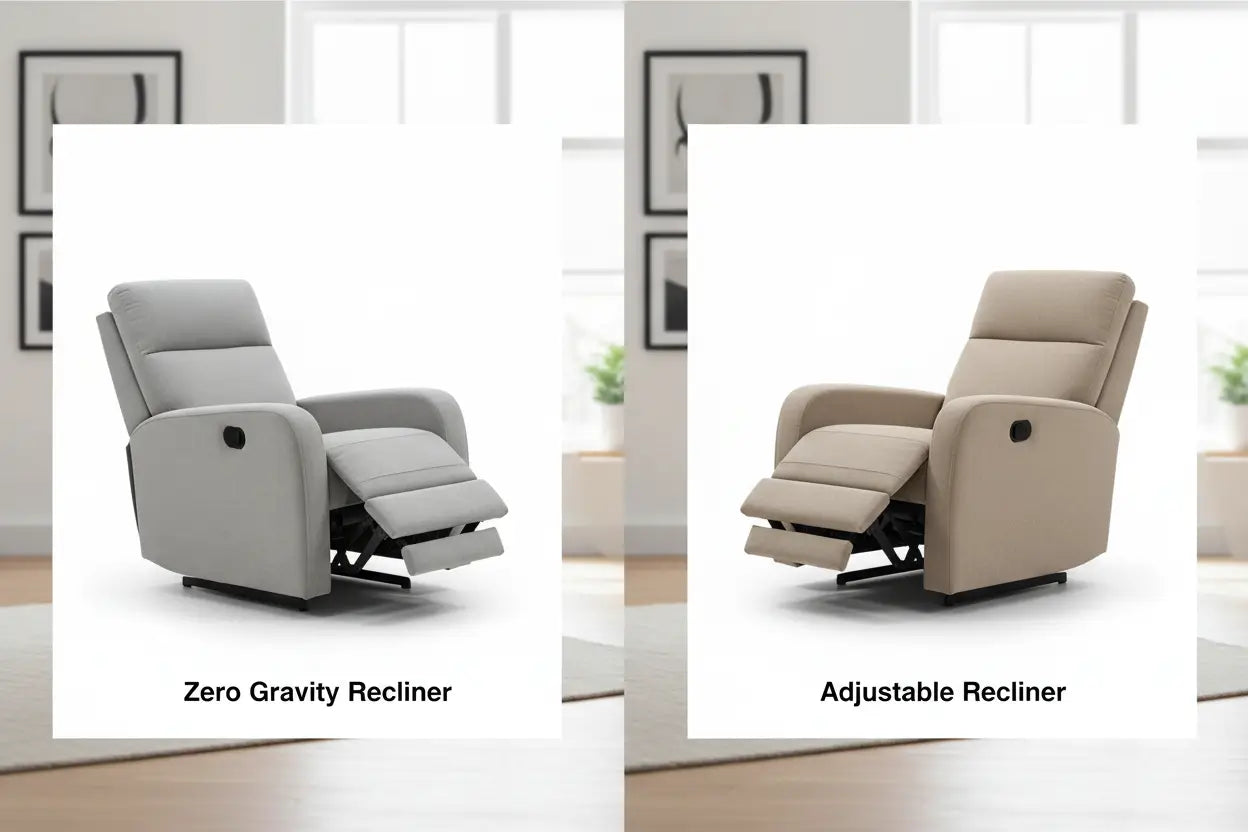
Key Differences in Depth-Zero Gravity Recliner vs Adjustable Recliner
1. Reclining Angle and Body Position
This is the most technically meaningful difference. An adjustable recliner typically reclines to 130-150 degrees with multiple stops along the way - excellent for varying postures throughout the day. A zero gravity recliner targets the 120-130 degree zone precisely, pairing that angle with elevated leg positioning to achieve full spinal decompression.
A common misconception: more recline equals more benefit. In practice, reclining past the neutral position (toward fully flat) actually bypasses the therapeutic angle entirely. Zero gravity chairs are not about extreme recline - they are about the right recline.
2. Leg Elevation and Circulation
Standard adjustable recliners raise the footrest to roughly level with the seat or slightly above. Zero gravity chairs elevate the legs so the feet are above heart level. This simple shift dramatically reduces the effort required for venous blood to return from the lower body, which is why zero gravity chairs are recommended for people with varicose veins, edema, ankle swelling, and poor circulation.
3. Spinal Support and Ergonomics
Adjustable recliners offer general back support, but most are not purpose-built for spinal health. Zero gravity recliners feature contoured lumbar zones and angled neck rests designed to maintain the spine's natural S-curve while fully reclined. For people with herniated discs, sciatica, or chronic lumbar tension, this precision engineering makes a tangible functional difference.
4. Space Requirements
Wall-hugger adjustable recliners can operate with as little as 3-4 inches of clearance from a wall, making them ideal for smaller rooms. Zero gravity chairs require their full recline depth to function correctly - often 60-70 inches from wall to footrest tip when fully extended. Always measure your available floor space before purchasing either type.
5. Price and Value
Entry-level adjustable recliners start around $250-$400. Quality zero gravity chairs typically begin at $400-$700 for manual models and exceed $1,000 for powered options with massage and heat. The price premium on zero gravity chairs reflects more precise engineering, specialized components, and therapeutic functionality - a justified cost for buyers with specific health needs, less so for casual everyday use.
Which Is Better: Zero Gravity Recliner or Adjustable Recliner for Your Needs?
Back Pain and Spinal Decompression
Zero gravity wins. Elevating the legs above the heart measurably reduces compressive force on lumbar discs. If you experience chronic lower back pain, post-surgical recovery soreness, or disc-related discomfort, the neutral body position provides relief that an adjustable recliner simply cannot match regardless of how far back it reclines.
Circulation, Swelling, and Vein Health
Zero gravity wins. Raising the feet above heart level promotes venous return and reduces fluid pooling in the legs and ankles. This is especially valuable for people who spend long hours on their feet, those with varicose veins, or anyone managing edema. Standard recliners keep the feet at or below seat level, providing minimal circulatory benefit.
Watching TV and Everyday Lounging
Adjustable recliner wins. The zero gravity position places your eyeline at an angle that can make screen viewing uncomfortable unless your TV is mounted at the right height. Adjustable recliners let you dial in exactly the upright or semi-reclined position that suits your room setup. For casual, varied daily use, their flexibility is genuinely superior.
Reading
Adjustable recliner wins. Reading requires holding a book or device at a comfortable angle, which is easier to achieve in a partially reclined position. Most readers find the fully reclined zero gravity angle less natural for sustained reading. A power adjustable recliner with a good mid-recline stop works better for this use case.
Napping and Sleeping in a Chair
Depends on your needs. For short naps of 1-2 hours, zero gravity positioning is supportive and comfortable. For longer sleep sessions - especially for those with acid reflux who cannot lie flat - a power recliner with a near-flat position may be preferable. Neither type fully replaces a bed for overnight sleep.
Extended Sitting Sessions (3+ Hours)
Zero gravity wins. Prolonged sitting builds compressive load in the lumbar spine regardless of how well-cushioned the chair is. The neutral body position distributes that load far more evenly, dramatically reducing fatigue and discomfort during extended use. If your recliner doubles as a work-from-home seat or recovery chair, zero gravity is the smarter long-term investment.
Common Buying Mistakes to Avoid
- Assuming more recline = more benefit. The therapeutic zero gravity angle is specific - going further back bypasses it entirely.
- Ignoring weight capacity. Zero gravity chairs are precision-built; exceeding the rated limit degrades both support and longevity.
- Not measuring recline depth. Always check the full extended length, not just the upright footprint.
- Choosing massage features over frame quality. A weak frame with a good motor is still a poor recliner.
- Skipping seat depth measurement. A seat too deep prevents proper lumbar contact; too shallow creates knee pressure.
- Overlooking motor noise. Test power recliner motor volume, especially if intended for bedroom use.
- Buying based on photos alone. Fabric durability, cushion density, and footrest height are impossible to judge from images.
Practical Buying Tips
If You're Buying a Zero Gravity Recliner
- Confirm the footrest elevates your feet noticeably above your heart when fully reclined.
- Look for adjustable headrests - neck support matters significantly at reclined angles.
- Choose power operation if you'll use it daily; single-button recline reduces strain on joints.
- Prioritize lumbar contouring over massage intensity for genuine back pain relief.
If You're Buying an Adjustable Recliner
- Wall-hugger models save 12-15 inches of floor depth - essential for smaller living rooms.
- For tall users (6'+ ), confirm the headrest aligns with your actual sitting height.
- Test handle or button placement - controls should be reachable without awkward leaning.
- Look for reinforced steel frames over particleboard or lightweight aluminum for durability.
Universal Tips for Either Type
- Check the return policy before purchasing - comfort is personal and showroom impressions differ from home use.
- Read reviews from people with similar body dimensions and health conditions to yours.
- For households with pets or children, look for performance fabrics rated for 50,000+ double rubs.
- If budget allows, buy the best frame quality you can afford - motors and cushions can be upgraded; frames cannot.
Conclusion
The choice between a zero gravity recliner and an adjustable recliner is not about which is universally better - it is about which one is better for your life. If you deal with back pain, poor circulation, or spend long hours seated, a zero gravity recliner is a targeted health investment with real, measurable benefits. If you want versatile everyday comfort for TV, reading, and relaxing in a range of positions, a high-quality adjustable recliner delivers excellent value without the premium price.
Whichever direction you choose, quality engineering and honest design matter more than feature counts. Magic Home curates a thoughtfully selected range of both zero gravity and adjustable recliners, built to deliver genuine ergonomic performance in real homes - not just impressive specs on a product page. Whether you're furnishing a dedicated relaxation space or simply upgrading your everyday seat, Magic Home makes it straightforward to choose the right recliner for your body, your room, and your budget.