


How do Zero Clearance Recliners Fit into Small Spaces?

If you've ever wanted a recliner but assumed your apartment or small living room was simply too cramped for one, you're not alone - and you may be working with outdated assumptions. Zero clearance reclinerswere engineered specifically for compact living.
This guide walks through exactly how these recliners work, how to measure and place one in a tight room, and what to look for when choosing a model that suits your space without sacrificing an ounce of comfort.
Why Zero Clearance Recliners Work in Small Spaces
The answer comes down to direction of movement.
A standard recliner reclines by pushing the backrestbackward- away from you, toward the wall. To do this without hitting the wall, the chair must sit far out into the room. That required gap - typically 12 to 20 inches of empty space between chair and wall - is dead floor space. It cannot be used for anything else, but it still eats into your room's usable depth.
A zero clearance recliner - also called a wall-hugger or wall-saver recliner - works on the opposite principle. As you lean back, the seat glidesforward, toward you. The footrest rises simultaneously. Because the chair is moving away from the wall rather than toward it, the backrest stays in nearly the same position throughout the entire recline. The wall behind it never needs to accommodate backward travel.
That single mechanical difference is why a zero clearance recliner can sit just 3 to 6 inches from a wall and still recline completely - while a standard recliner in the same position would jam against the wall before opening halfway.
Standard vs. Zero Clearance: Space Comparison
| Feature | Standard Recliner | Zero Clearance Recliner |
| Distance from wall (upright) | 12-20 inches | 3-6 inches |
| Additional clearance to recline | 0 (already pre-positioned far out) | 0-3 inches |
| Total wall clearance required | 12-20 inches | 3-6 inches |
| Space recovered vs. standard | - | Up to 14-17 inches |
| Footrest extension (forward) | 18-24 inches | 18-24 inches |
| Best room type | Large rooms | Small apartments, compact rooms |
Key point:The footrest extension is the same for both types - forward space in front of the chair is always required. The difference is entirely behind the chair, where zero clearance models recover up to 17 inches of floor depth.
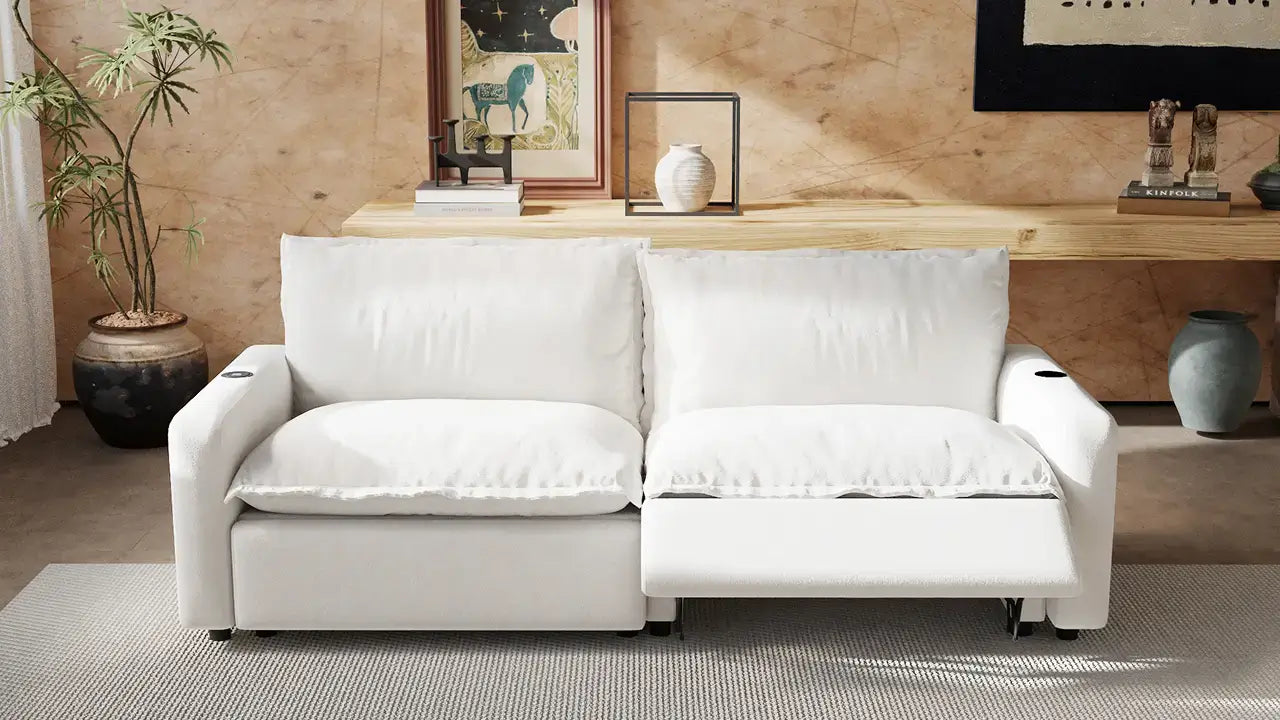
How to Measure and Place a Zero Clearance Recliner in a Small Room
Even the most compact recliner needs a bit of planning to work well in a small room. Follow these steps before you buy:
Step 1 - Measure Your Wall Space
Measure the width of the wall section where the chair will sit. Compare this to the chair's stated width. For single chairs, look for models in the 32-36 inch range; for loveseats, aim for under 60 inches wideto maintain walkway space on at least one side.
Step 2 - Calculate the Reclined Depth
This is the most important measurement most buyers skip. Every product listing should include areclined depth- the distance from the back of the chair to the tip of the fully extended footrest. This number tells you the true floor space the chair occupies when in use.
How to calculate whether it fits:
Room depth available  =  [Total room depth]
                      −  [Furniture depth on opposite wall, e.g. TV console: 18 inches]
                      −  [Comfortable walkway in front of footrest: 30 inches minimum]
                      =  Maximum reclined depth your room can accommodate
Worked example:
- Room depth: 120 inches (10 feet)
- TV console depth: 18 inches
- Minimum walkway: 30 inches
- Maximum recliner reclined depth:72 inches
If the chair's reclined depth is listed at 66 inches, it fits with 6 inches to spare. If it's listed at 78 inches, it does not fit without compromising the walkway.
Always use the reclined depth - not the upright depth - for this calculation. A chair that looks compact when upright can extend 20-24 inches forward when the footrest opens.
Step 3 - Mark It on the Floor Before Committing
Use painter's tape to outline the chair's full footprint on the floor - both the upright position and the reclined position (with footrest extended). Include the 3-6 inch gap behind the chair from the wall.
Walk through the space as you normally would. Carry something. Check that doorways and main paths remain clear. This five-minute exercise surfaces problems that measurements on paper can miss.
Room Size Reference Table
| Room Size | Recommended Format | Max Reclined Depth | Notes |
| Under 10 × 10 ft | Single chair only | 65 inches | Prioritize corner placement |
| 10 × 12 ft | Single chair | 70 inches | One chair works; loveseat crowds the room |
| 12 × 14 ft | Single chair or compact loveseat | 76 inches | Loveseat viable if placed along longest wall |
| 14 × 16 ft | Loveseat or two single chairs | 84 inches | Multiple recline positions possible |
| 15 × 18 ft and above | Full loveseat or sofa recliner | 90+ inches | Standard recliner also becomes viable |
Best Placement Strategies for Small Rooms
Where you place a zero clearance recliner determines how much floor space it actually frees up - and how well the room still functions around it.
Corner Placement: The Highest-Efficiency Option
Tucking a single zero clearance chair into a corner is the single most space-efficient placement available in a small room. It accomplishes three things simultaneously:
- The two walls behind and beside the chair define the chair's position - no floating furniture eating into the center
- The corner is typically the least-trafficked part of any room, so footrest extension causes the least disruption
- It creates a defined reading or relaxation nook, which makes a small room feel purposefully laid out rather than cramped
Space recovered by corner placement versus center-floating: in a 10 × 12 foot room, a corner-placed zero clearance chair leaves roughly 40% more open floor in the center compared to the same chair placed away from walls.
Along-Wall Placement: Best for Loveseats
For a zero clearance loveseat, the longest wall in the room is almost always the right position. Align it parallel to the wall, centered or offset toward one end.
- A 58-inch loveseat on a 12-foot wall leaves approximately 26 inches on one side - enough for a narrow side table and a clear walkway
- Face it toward the TV or focal point to avoid needing to angle the piece, which wastes floor space on both sides
| Placement | Usable Floor Space Remaining | Walkway Impact |
| Along longest wall | High - center of room stays open | Minimal |
| Floating in center | Low - blocks flow in multiple directions | Significant when reclined |
| Corner (single chair) | Highest - corner space utilized, center free | Minimal |
Single Chair vs. Loveseat: Space Footprint Comparison
Both formats use the same zero clearance mechanism, but their total floor impact differs significantly:
| Format | Typical Width | Reclined Depth | Total Floor Area | Best For |
| Single chair | 32-36 inches | 60-68 inches | ~16-18 sq ft | Studios, bedrooms, reading corners |
| Compact loveseat | 52-58 inches | 64-72 inches | ~24-28 sq ft | Living rooms, 1-bedroom apartments |
| Full reclining sofa | 72-84 inches | 68-76 inches | ~34-42 sq ft | Larger rooms replacing sofa + recliner |
For rooms under 120 square feet, a single zero clearance chair almost always functions better than a loveseat - the loveseat saves seating space but costs floor space the room cannot afford. For rooms between 120 and 180 square feet, a compact loveseat along the longest wall is typically the highest-value configuration.
Final Thoughts
For anyone living in a compact apartment, a smaller home, or simply trying to make the most of a limited living room, zero clearance reclinersare one of the most practical furniture decisions you can make. Measure your room, choose the right format and size for your household, and pay close attention to the reclined depth - not just how the chair looks when upright. Get those details right, and you gain full reclining comfort without giving up a square foot more than necessary.
If you're looking for a trusted starting point, Magic Homehas built a strong reputation for quality space-saving reclining solutions - offering a range of zero clearance recliners and compact reclining sofas designed with smaller living spaces in mind. Their lineup is worth exploring whether you need a single accent chair for a studio or a full loveseat for a cozy living room.
With the right zero clearance recliner from a brand like Magic Home, you don't have to choose between a comfortable home and a well-organized one - you get both.