


Wall Hugger vs Standard Recliners — Which Is Right for Your Space?

Introduction
Choosing between wall hugger vs standard recliners mainly depends on how much space you have and how you prefer to relax.
Wall hugger recliners use a forward sliding mechanism that allows them to sit close to the wall, typically requiring only ~3-6 inches of clearance. Traditional recliners, on the other hand, usually need 12-36 inches or more of space behind them to fully recline.
Understanding these differences makes it much easier to choose a recliner that fits both your room layout and your comfort expectations.
What Is a Wall Hugger Recliner?
A wall hugger recliner is designed to recline while staying close to the wall.
Instead of pushing the backrest straight backward, the seat slides forward as the chair reclines. This keeps the overall footprint compact throughout the motion.
Most wall hugger recliners require only 3-6 inches of wall clearance, making them a practical choice for apartments, condos, bedrooms, and smaller living rooms where floor space is limited.
Clearance requirements vary by model, so always check the manufacturer's specifications before purchasing.
Wall Hugger vs Standard Recliners: Side-by-Side Comparison
| Feature | Wall Hugger Recliners | Standard Recliners |
|---|---|---|
| Space Needed Behind | ~3-6 in (7-15 cm) | ~12-36 in (30-90 cm) |
| Recline Mechanism | Forward slide / zero-wall | Backward tilt |
| Best For | Tight or compact rooms | Large, open spaces |
| Typical Comfort | Good, ergonomic | Often deeper recline |
| Typical Price Range | $300-$2,200+ | $300-$1,600+ |
If you have less than 12 inches of clearance behind your seating, a wall hugger recliner is the practical choice.
If space is not a concern and you prefer a deeper, laid-back recline, a standard recliner may suit you better.
Wall Hugger vs Standard Recliners: Top 4 Differences
Space Clearance
Wall hugger recliners are designed for minimal clearance.
They typically need only 3-6 inches of space behind them to recline fully, allowing placement close to walls without restricting motion.
Standard recliners usually require 1-3 feet (12-36 inches) of clearance. Without enough space, the backrest or footrest may hit the wall or fail to extend properly.
Planning your layout with these ranges in mind helps avoid placement issues and ensures smooth reclining.
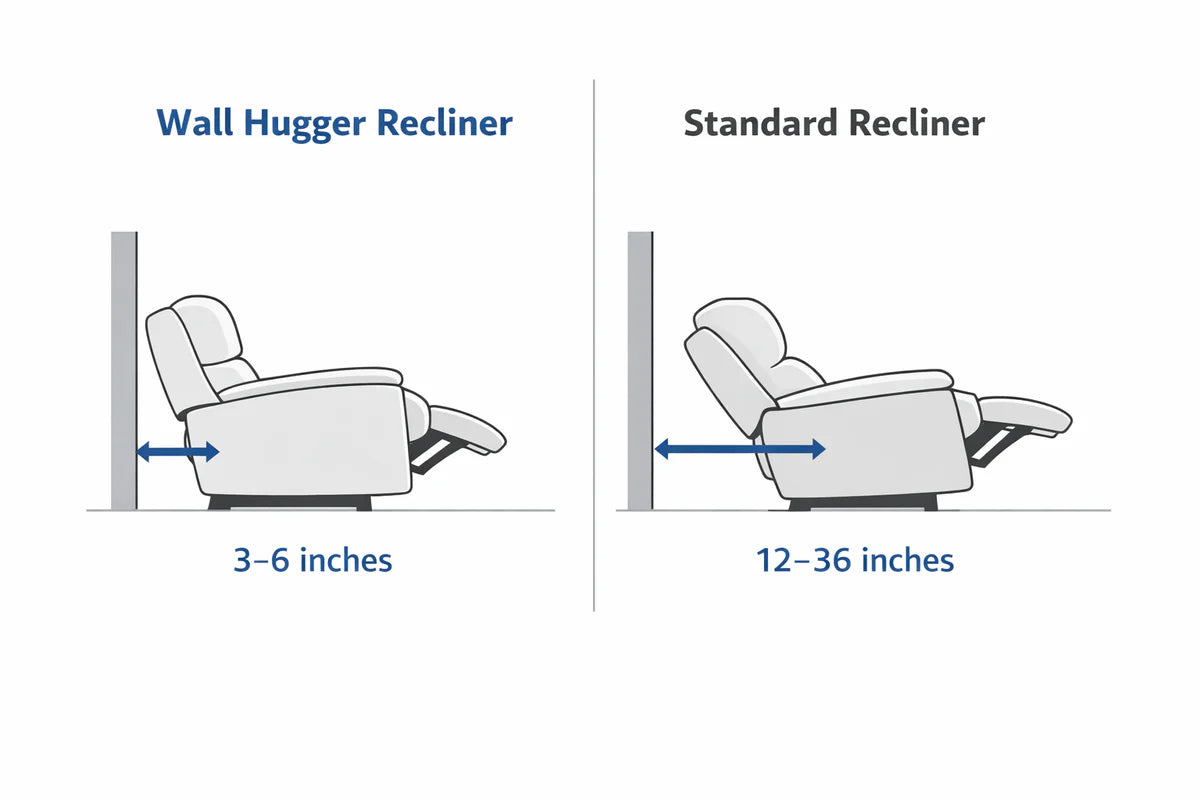
Reclining Mechanism and Motion Path
The recline motion determines how much space the chair needs.
Wall hugger recliners rely on a forward glide or zero-wall mechanism, keeping the chair close to the wall throughout recline.
Standard recliners use a backward tilt, which demands more space behind the chair but often allows a longer recline path.
Recline Depth and Comfort Feel
Standard recliners often feel more deeply reclined, while wall huggers focus on efficiency.
- Wall hugger recliners prioritize compact motion and space efficiency
- Some standard recliners offer deeper recline angles and wider seating
Overall comfort depends more on seat depth, cushioning, lumbar support, and build quality than on the reclining mechanism alone.
Price Differences
Wall hugger recliners tend to cost slightly more on average due to their space-saving mechanisms.
- Entry-level wall hugger recliners (~$300-$600) are usually basic models with manual recline and fewer design options
- Average wall hugger models (~$800-$1,400) often include better cushioning, power recline, and improved ergonomics
- High-end wall hugger recliners ($1,800-$2,200+) may feature premium materials, power headrests, and advanced mechanisms
Standard recliners offer a wider range of affordable options:
- Entry-level standard recliners (~$300-$700) are widely available and often focus on simple manual reclining
- Mid-range models (~$600-$1,200) balance comfort, durability, and recline depth
- High-end standard recliners ($1,200-$1,600+) typically emphasize plush cushioning, leather upholstery, or power features
Wall Hugger vs Standard Recliners: How to Choose Based on Room Type
Choosing between a wall hugger and a standard recliner becomes much clearer once you consider room size, movement space, and how the room is actually used. Different rooms place very different demands on seating.
Small Single Bedrooms
Wall hugger recliners are usually the better choice for small bedrooms.
In compact bedrooms, usable floor space matters more than maximum recline depth. Wall hugger recliners typically need only 3-6 inches of clearance, allowing you to place the chair close to the wall without blocking drawers, doors, or walkways.
They also reduce visual and physical clutter, which is important in tight rooms where nightstands, desks, or wardrobes compete for space. A standard recliner, by contrast, often pulls too far into the room when reclined, making the space feel crowded.
Magic Home Small Wall Hugger Reclining Sofa
BLOG-ONLY: Get 10% OFF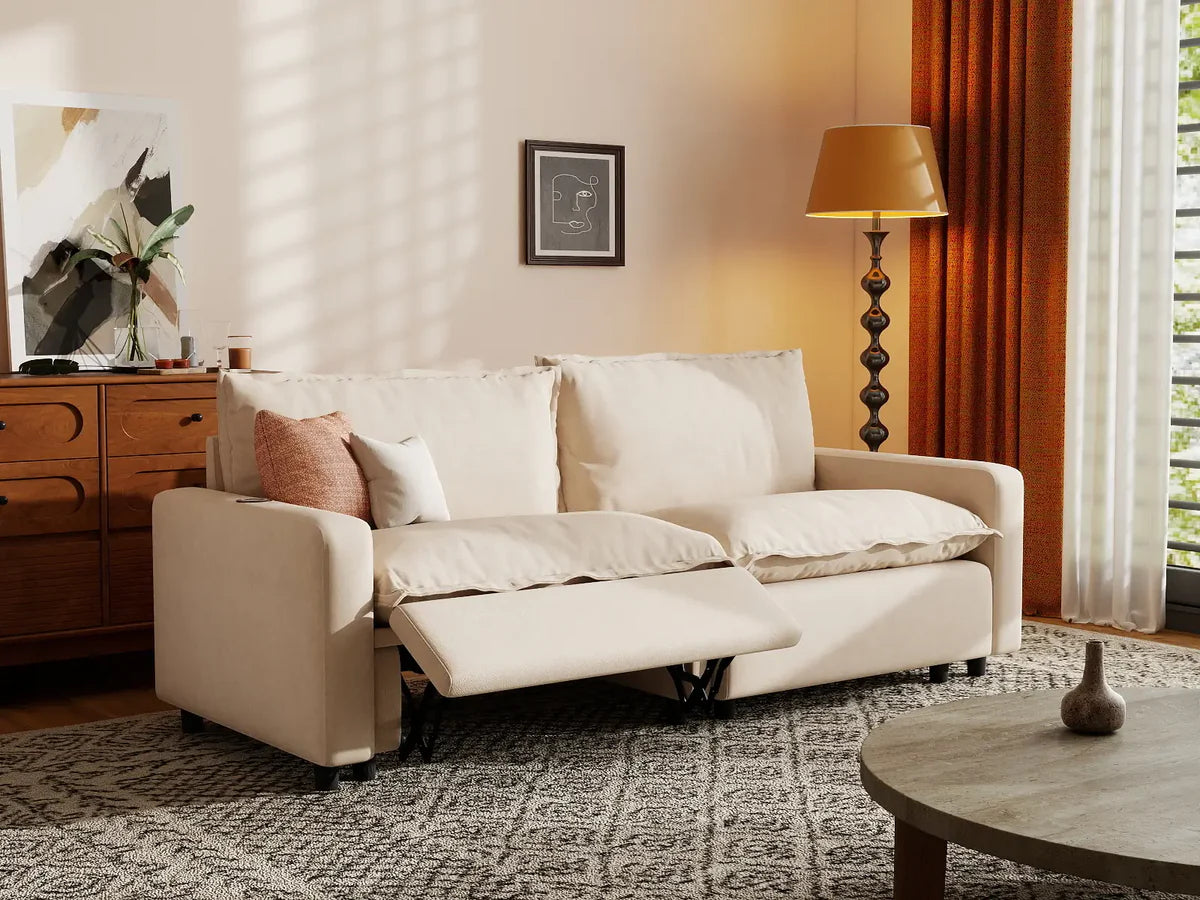
Home Theater or Media Rooms
Standard recliners tend to work better when space allows.
In media rooms, comfort during long sitting sessions is the priority. Standard recliners often offer deeper recline angles and longer footrest extension, which can feel more immersive for movie watching or gaming.
That said, layout still matters. If your media room has narrow aisles or multiple seats in a row, wall hugger recliners can help maintain clear walkways and consistent spacing between chairs.
Senior or Mobility-Sensitive Spaces
Ease of access and safe movement matter more than recline depth.
For seniors or mobility-sensitive users, the ability to sit down, stand up, and move around the chair safely is critical. Power recliners with smooth controls can reduce physical effort in both wall hugger and standard designs.
When room clearance is limited, wall hugger recliners help keep pathways open and reduce the risk of bumping into furniture while standing or walking. Seat height, arm support, and control placement often matter more than the recline mechanism itself.
Children's Shared Spaces or Family Rooms
Wall hugger recliners are generally more practical in shared, active spaces.
In family rooms where children play or move around frequently, open floor space and clear sightlines are important. Wall hugger recliners take up less space when reclined, helping reduce tripping hazards and accidental collisions.
Durable upholstery and simple mechanisms are also important, as recliners in shared spaces tend to see heavier, less careful use.
Magic Home Wall Hugger Reclining Sofa for Families
BLOG-ONLY: Get 10% OFF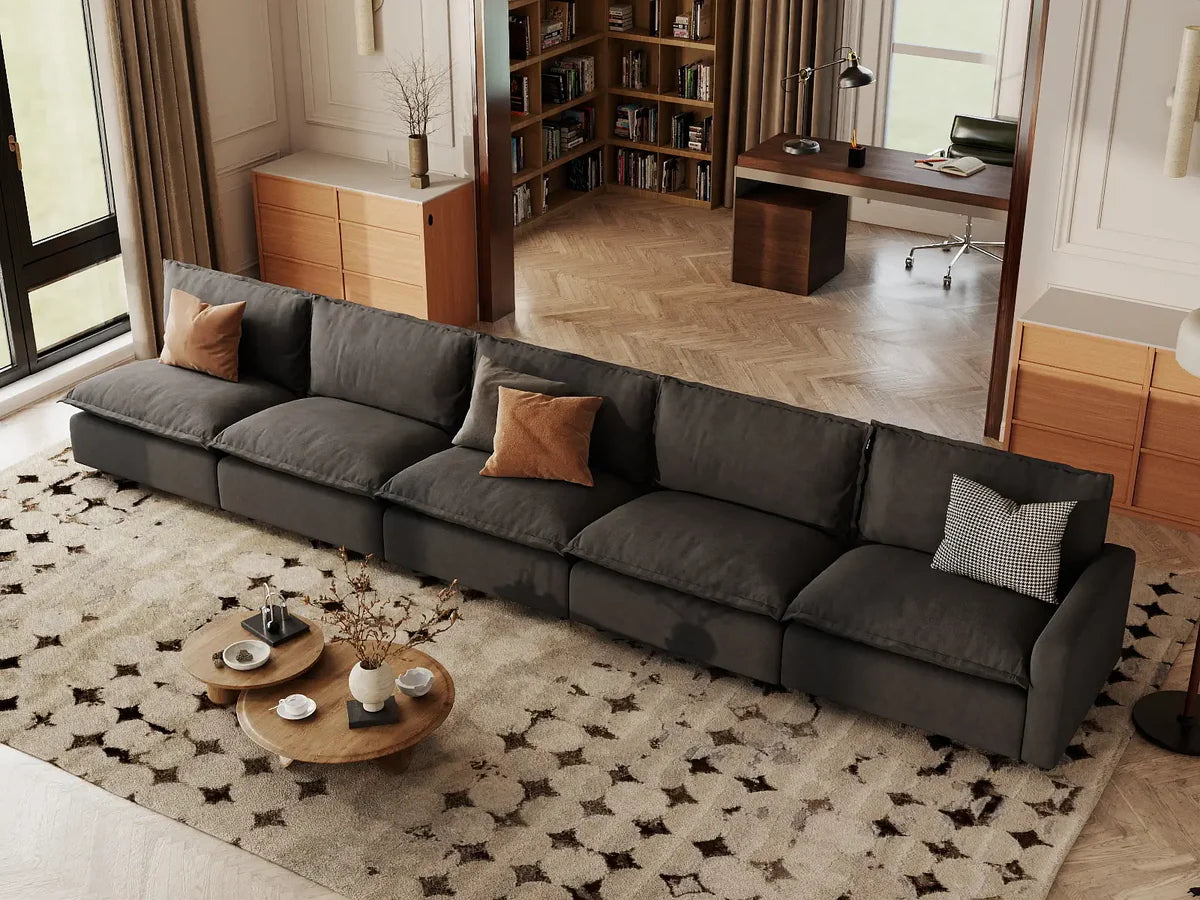
Who Should Choose Which Recliner
When to Choose a Wall Hugger Recliner
This style may be more suitable if you have limited clearance behind your chair, such as in apartments, condos, or compact living rooms. Many wall hugger models are designed to sit close to the wall without sacrificing full reclining motion, making them appropriate for spaces where wall distance is restricted.
When to Choose a Standard Recliner
If your room has ample floor space and you prefer a potentially broader range of reclining positions or larger footprint seating, a standard recliner may fit better. These designs often provide deeper recline and greater surface area to accommodate a wide range of body types and lounging habits.
Quick Comparison Summary
- Wall hugger recliners: best for rooms with limited wall clearance (3-6 in)
- Standard recliners: better for larger spaces that allow deeper recline (12-36 in)
- Both styles vary by comfort, features, and price depending on model
Conclusion
The difference between wall hugger and standard recliners ultimately comes down to space versus recline depth.
Wall hugger recliners are ideal for tight layouts and modern homes where wall clearance is limited, while standard recliners perform best in larger rooms that allow deeper reclining positions. Measuring your available space first is the most reliable way to avoid layout issues.
Brands like Magic Home, which focuses on reclining sofa designs, offer both wall hugger and standard reclining options. This makes it easier to choose a recliner based on how you actually use your room—whether you prioritize space efficiency, deeper relaxation, or a balance of both.