


Sectional sofas are one of the most popular seating choices for modern living rooms. They provide generous seating space, flexible layouts, and a comfortable place for families to relax together.
When choosing a sectional, many buyers face a common question: should you choose a reclining sectional or a traditional sectional sofa?
A reclining sectional includes seats that can lean back and extend a footrest, creating a more relaxed lounging experience. A traditional sectional, on the other hand, keeps a fixed seating position and usually has a slimmer design.
Both options can work well in a living room, but they serve different needs. This guide compares reclining sectionals and regular sectional sofas across comfort, space requirements, price, style, and everyday practicality to help you decide which one fits your home best.
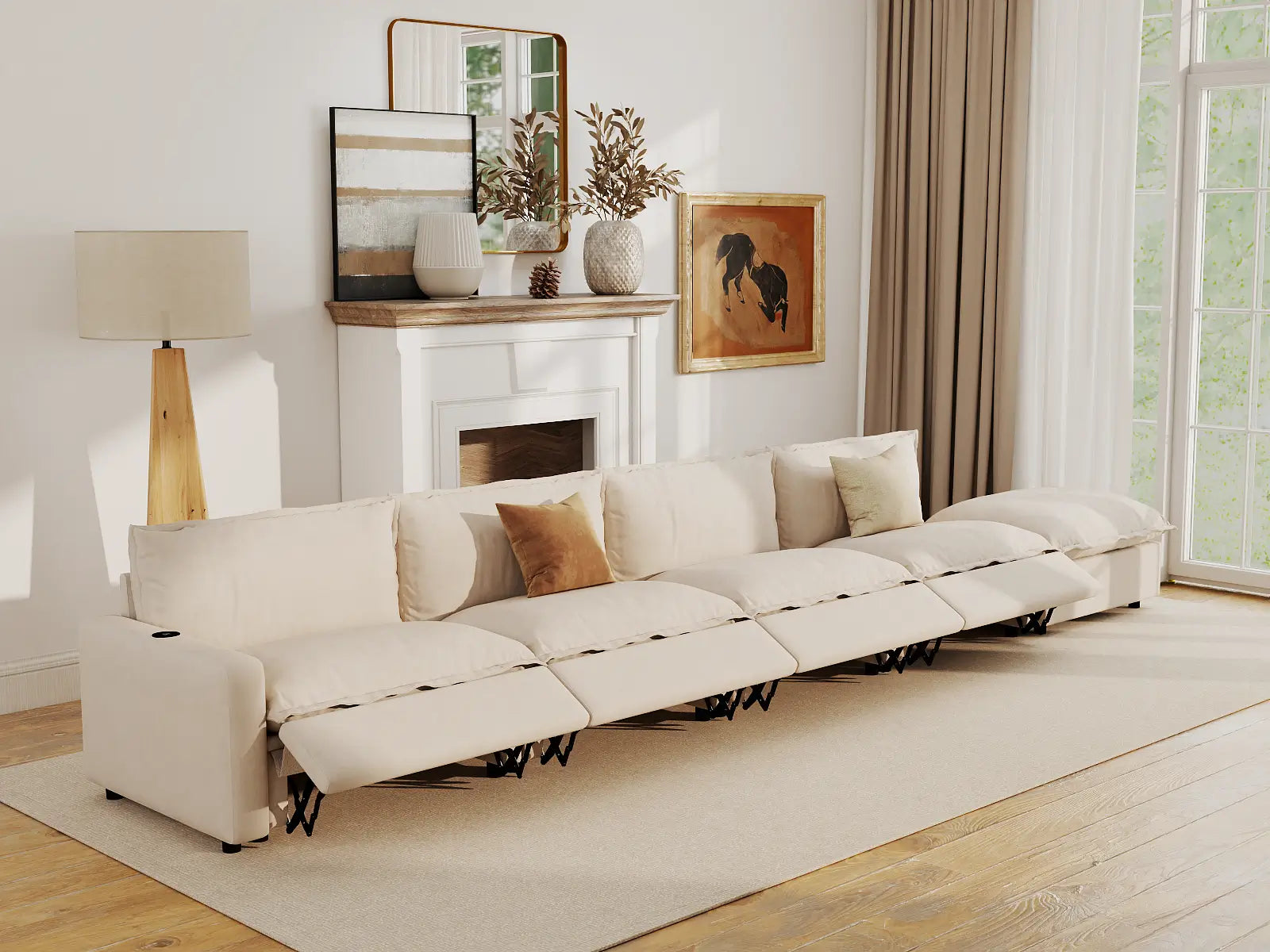
Quick Answer: Reclining Sectional vs Sectional
The main difference between a reclining sectional and a traditional sectional sofa is adjustable comfort versus space efficiency.
Reclining sectionals allow users to lean back and raise a footrest, making them ideal for relaxing, watching TV, or creating a home theater style seating experience. Traditional sectionals offer fixed seating but often provide more flexible layouts, a slimmer profile, and easier placement in smaller living rooms.
In general:
- Reclining sectionals prioritize comfort and relaxation
- Traditional sectionals prioritize flexibility and space efficiency
Reclining Sectional vs Sectional - Key Differences
| Feature | Reclining Sectional | Traditional Sectional |
| Seating Comfort | Adjustable reclining seats | Fixed seating |
| Relaxation | Ideal for lounging and TV watching | Good for everyday seating |
| Space Requirements | Needs wall clearance | Can sit closer to the wall |
| Price Range | Usually higher | Often more affordable |
| Seating Flexibility | Individual reclining seats | Continuous seating space |
| Design Variety | Slightly bulkier | Wider range of styles |
In simple terms, reclining sectionals focus on comfort and relaxation, while traditional sectionals focus on design flexibility and efficient use of space.
Comfort Comparison
Comfort is often the main reason people choose a reclining sectional sofa.
Reclining sectionals allow users to lean back and raise a footrest, which helps reduce pressure on the lower back and legs. This adjustable position makes them especially comfortable for activities like watching movies, reading, or taking short naps. Some models also include power reclining controls, allowing users to adjust the seat angle smoothly.
Traditional sectional sofas provide comfort through cushioning and seat depth rather than adjustable positions. While they can still be very comfortable, they do not offer the same reclining support that helps the body relax for long periods.
For households that spend a lot of time watching TV or relaxing together, reclining sectionals often provide a more lounge focused seating experience.
Space Requirements and Layout
Space planning is an important factor when choosing between these two sofa types.
Reclining sectionals need extra room behind the sofa so the backrest can tilt backward. Most reclining sofas require about 6 to 12 inches of wall clearance in order to recline fully. In addition, the footrests extend forward when the seat reclines, which can reduce walking space in front of the sofa.
Traditional sectional sofas are easier to place in tighter spaces. Because the seats remain fixed, they can sit closer to the wall and maintain more open walking areas in the living room.
For apartments or compact living rooms, traditional sectionals are often easier to arrange. Reclining sectionals typically work best in larger family rooms or entertainment spaces where there is enough room for reclining movement.
Price Differences and Long-Term Value
Typical Price Range
Price is often one of the biggest differences between these two sofa types. Reclining sectionals usually cost more because they include mechanical parts, metal frames, and sometimes electric motors that allow the seats to recline. A typical reclining sectional can range from about $1,500 to $5,000 or more, depending on the size, materials, and added features such as power reclining or USB charging ports. Traditional sectionals are usually more budget-friendly because they have a simpler structure. Many standard sectionals fall within a $700 to $2,500 price range, although high-end designer models can cost more.
Cost of Maintenance
Long-term maintenance is another factor to consider. Reclining sectionals include moving components such as motors, springs, and reclining mechanisms, which may require occasional repairs after years of use. If a power recliner motor stops working or a manual lever breaks, fixing these parts can add to the overall cost of ownership. Traditional sectionals, on the other hand, have a much simpler design without mechanical systems. Because of this, they usually require less maintenance and fewer repairs over time, which can make them a more economical choice for some households.
Design and Style Differences
Traditional sectionals often offer greater design flexibility.
Because they do not include reclining mechanisms, they tend to have slimmer frames and cleaner lines. This allows them to fit well in many interior styles, including modern, minimalist, Scandinavian, and transitional living rooms.
Reclining sectionals are usually designed with comfort as the top priority. They often feature larger cushions, wider armrests, and deeper seating, which creates a more relaxed and casual appearance. While many modern reclining sofas now have sleeker designs, they can still appear slightly bulkier than traditional sectionals.
Both types are available in a range of materials such as leather, linen, chenille, and performance fabrics, allowing homeowners to choose upholstery that fits their lifestyle and décor.
Pros and Cons of Each Sofa Type
Pros of Reclining Sectionals
- Adjustable reclining seats for better relaxation
- Built in footrests for leg support
- Ideal for movie nights and home theater setups
Cons of Reclining Sectionals
- Require more space from the wall
- Usually more expensive
- Mechanical parts may require maintenance
Pros of Traditional Sectionals
- More compact and space efficient
- Greater variety of styles and layouts
- Usually more affordable
Cons of Traditional Sectionals
- Fixed seating position
- Less lounging support compared to recliners
Which Sectional Sofa Should You Choose?
The right choice depends largely on your living room space and how you plan to use the sofa.
Choose a reclining sectional if:
- You want maximum comfort for watching TV or relaxing
- Your living room has enough space for reclining clearance
- You prefer adjustable seating positions
Choose a traditional sectional if:
- Your living room is smaller or space is limited
- You want flexible seating for guests or gatherings
- You prefer a slimmer sofa design that fits many interior styles
For many households, the best sofa is the one that balances comfort, layout flexibility, and overall room design.
Buying Tips Before Choosing Between the Two
Choosing between a reclining sectional and a traditional sectional sofa is not only about style. Your living room size, daily habits, and long term comfort preferences can all influence which option works best. Before making a final decision, consider the following factors.
Measure Your Living Room Carefully
Accurate measurements are essential when buying any sectional sofa, especially a reclining sectional. Reclining models need additional space for the backrest to tilt and the footrests to extend forward. In most cases, you should allow 6-12 inches of clearance behind the sofa and ensure there is enough open space in front for the footrests.
Traditional sectionals are easier to place because the seats remain fixed. However, you should still measure the overall length, depth, and corner dimensions of the sectional to make sure it fits comfortably in the room. Always leave enough walking space around the sofa so the layout does not feel crowded.
Think About How the Sofa Will Be Used
Your daily habits should play a major role in choosing the right sectional.
If your living room is mainly used for watching TV, relaxing, or movie nights, a reclining sectional can provide better comfort thanks to adjustable seating positions and built in footrests.
If your home often hosts guests, family gatherings, or social events, a traditional sectional may be more practical. Because the seating surface is continuous, people can move around easily, sit sideways, or lie across the cushions without being restricted by reclining sections.
Compare Upholstery Durability
The upholstery material can affect both durability and maintenance.
Reclining sectionals include moving parts, which means the seat and back cushions may experience more frequent movement and friction. Durable materials such as performance fabrics, chenille, or top grain leather are often good choices because they resist wear and are easier to clean.
Traditional sectionals generally allow more flexibility in upholstery choices, since they do not include mechanical movement. For households with pets or children, stain resistant fabrics or washable covers can help keep the sofa looking good for longer.
Consider Long Term Comfort
A sofa should remain comfortable for years, not just during the first few weeks of use.
When comparing sectionals, pay attention to seat depth, cushion firmness, and back support. Reclining sectionals provide adjustable seating angles, which can reduce pressure on the back and legs during long periods of sitting. However, some people prefer the consistent support of a traditional sectional with deeper cushions or a chaise.
It is also helpful to consider who will use the sofa most often. Families with multiple users may prefer the flexibility of a traditional sectional, while individuals who prioritize relaxation may appreciate the adjustable comfort of a reclining sectional.
Conclusion
Both reclining sectionals and traditional sectional sofas offer comfortable seating for modern living rooms, but they serve different priorities.
Reclining sectionals focus on relaxation and adjustable comfort, making them perfect for movie nights, family rooms, and entertainment spaces. Traditional sectionals provide flexibility, design variety, and efficient use of space, which often makes them easier to place in apartments or smaller living rooms.
If comfort and lounging are your top priorities, a reclining sectional may be the better choice. If space efficiency and versatile design matter more, a traditional sectional sofa may fit your home better.
Many homeowners today look for sofas that balance comfort, durability, and modern design. Well designed sectionals from Magic Home can offer a combination of spacious seating and everyday comfort for a wide range of living room layouts.


