


Introduction
The main difference in a recliner vs zero gravity recliner comparison lies in body positioning and intended use. While both recline, they support the body in different ways and are designed for different sitting durations and comfort priorities.
Choosing a recliner can influence comfort and how your body is supported while sitting, including posture and pressure distribution. This guide explains how zero gravity recliners work, how they compare with traditional recliners in real-world use, and how to choose between them based on space, budget, and comfort needs.
How Does a Zero Gravity Recliner Work?
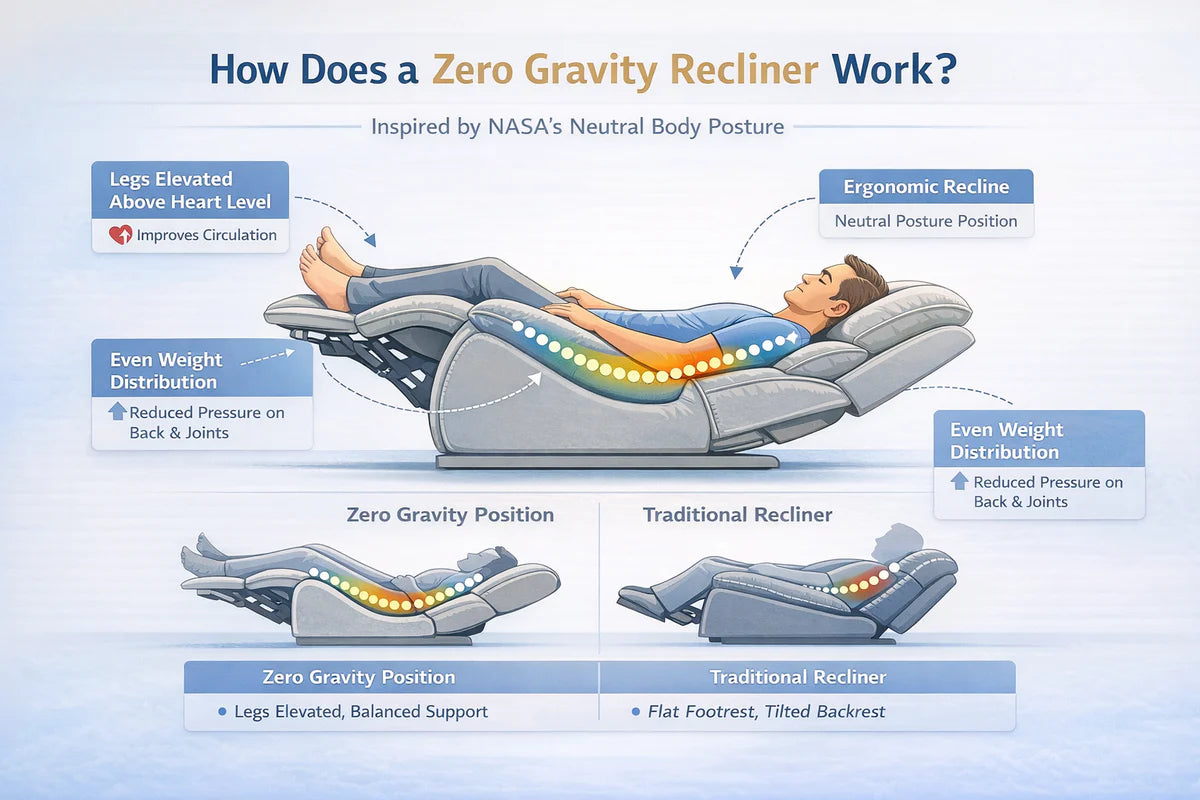
A zero gravity recliner is a type of reclining seat designed to place the body in a neutral posture, where the legs are elevated above heart level and body weight is supported across the back and legs.
The zero gravity position was inspired by NASA's neutral body posture research and aims to encourage more even weight distribution. In furniture design, this posture is achieved through synchronized recline angles rather than simply tilting the backrest while extending a footrest.
Key characteristics of a zero gravity reclining sofa include:
- Legs elevated above heart level
- Torso reclined at a fixed ergonomic angle
- Weight distributed across the back and legs rather than concentrated at the hips or lower back
This differs from traditional recliners, which primarily recline by tilting the backrest backward and extending a footrest independently.
Zero Gravity Recliner vs Traditional Recliner: Direct Comparison
| Aspect | Zero Gravity Recliner | Traditional Recliner |
|---|---|---|
| Body position | Legs elevated above heart level | Back tilts, feet forward |
| Pressure distribution | Designed to distribute weight across back and legs | Pressure often focused on hips and lumbar |
| Circulation support | Leg elevation may support circulation under some conditions | Less likely to elevate legs above heart level |
| Typical price range | ~$900-$3,000+ | ~$250-$2,000+ |
| Recline mechanism | Usually powered with synchronized motion | Manual or simple power |
| Typical use | Longer sitting sessions | Casual everyday lounging |
Body Positioning
With a zero gravity recliner, the legs are elevated while the torso reclines at a coordinated angle. This positioning is intended to distribute body weight across more contact points, which some users find feels more balanced during longer sitting sessions.
Traditional recliners tilt the backrest and extend a footrest forward. While this is more comfortable than upright seating, the feet typically remain level with or below the heart, and body weight continues to concentrate around the hips and lower back.
Weight and Pressure Distribution
Zero gravity recliners are designed so that body weight is shared between the back and legs rather than focused primarily on the seat. During extended sitting, this distribution may help reduce localized discomfort for some users.
Traditional recliners often rely on seat cushioning and lumbar padding for comfort. Even when reclined, pressure can remain concentrated in fewer areas, which may become noticeable over longer periods of use.
Circulation Support
In a zero gravity position, the recliner can elevate the legs above heart level. Compared with feet-down seating, this positioning may support circulation and is commonly referenced in ergonomic seating discussions.
Most traditional recliners do not elevate the legs above heart level in the same coordinated way, which limits any circulation-related effects beyond basic comfort.
Primary Use Cases
Zero gravity recliners are best suited for longer sitting sessions, while traditional recliners are better suited for short, casual use.
Zero gravity recliners are commonly used for extended relaxation, reading, or post-work rest where pressure balance and positioning may become noticeable over time. Traditional recliners are typically sufficient for activities such as watching TV, taking short breaks, or occasional napping.
Design and Space Considerations
Zero gravity recliners use coordinated recline angles that elevate the legs and recline the torso together. These designs are often better suited to medium or larger rooms where additional clearance is available.
Traditional recliners are available in a wider range of sizes, including compact and wall-hugger designs, making them easier to place in apartments or smaller living spaces.
Price Range Comparison (U.S. Market)
Zero Gravity Recliner Price
- Entry level: ~$900-$1,300
- Mid-range: ~$1,300-$2,500
- Premium models: ~$2,500-$3,000+
Pricing differences often reflect electric recline systems, synchronized mechanisms, and feature variations.
Traditional Recliner Price
- Entry manual models: ~$250-$500
- Mid-range power recliners: ~$600-$1,200
- Premium leather or power models: ~$1,500-$2,000+
Traditional recliners cover a broader price spectrum with a lower entry point.
Feature Options: Heat, Massage, and Adjustability
Many zero gravity recliners integrate adjustable headrests, multi-motor recline systems, and optional heat or massage features. These features are commonly designed to work with the elevated recline position.
Traditional recliners may also offer heat or vibration, but these features are typically optional upgrades. The core design generally focuses on basic recline and footrest movement.
Which Seating Matches Your Needs: Zero Gravity vs Traditional Recliners
Here's a practical way to decide based on how you live and what matters most to you.
Choose a Traditional Recliner If…
- You want a comfortable seat mainly for everyday lounging or short breaks
- You prioritize simplicity over ergonomic features
- You have limited space or need a more budget-friendly option
Choose a Zero Gravity Reclining Sofa If…
- You often sit for long periods and want better weight distribution
- You're concerned about posture, back support, and circulation
- You want advanced features like adjustable headrests, heat, or massage
Modular Cero Sectional Sofas | 2-Piece Beige Linen Efficient Modern Loveseats 2-Seater
BLOG-ONLY: Get 10% OFF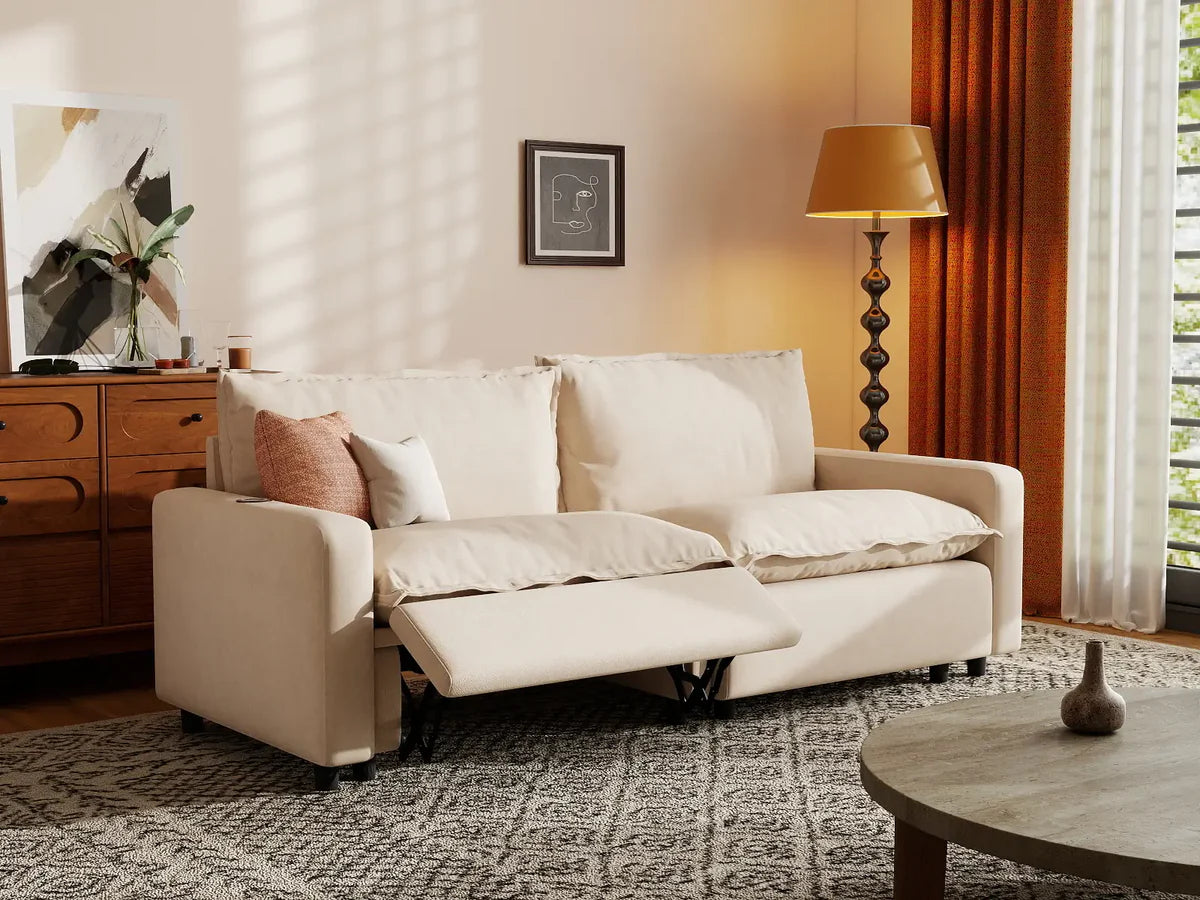
When Neither Is Ideal
Consider alternatives if:
- You primarily want upright posture support (e.g., office chair)
- You want sectional seating for family relaxation (sectional sofa)
- You need mobility-assisting lift chairs
Conclusion
The difference between a recliner and a zero gravity recliner comes down to body positioning, sitting duration, and design complexity. Zero gravity recliners are designed for longer sitting sessions with elevated leg positioning, while traditional recliners focus on simple, accessible comfort.
When evaluating zero gravity seating, compare specific models such as those from Magic Home to ensure they fit your space, comfort preferences, and budget.Traditional recliners remain a widely available option for everyday relaxation.


