


How to Fit a Reclining Sectional in an Open-Concept Living Room

Open-concept homes are designed to feel spacious and connected. The living room, dining area, and kitchen often share one large open space without dividing walls. While this layout looks modern and airy, it can make furniture placement more challenging.
One common question homeowners ask is: Can a large reclining sectional work in an open-concept living room? The answer is yes - but only with thoughtful planning.
This guide explains how to fit a reclining sectional in an open-concept living room, including measurements, layout strategies, and practical design tips.
Why Reclining Sectionals Are Challenging in Open-Concept Rooms
Unlike traditional sofas, reclining sectionals include moving mechanisms that require additional space. In open layouts, this creates three common challenges.
1. Reclining Clearance
Most reclining seats require 12-18 inches of space behind the sofa for the backrest and footrest to extend fully.
Without enough clearance, the recliner may hit walls, tables, or other furniture.
2. Lack of Wall Anchors
In traditional living rooms, sofas often sit against a wall. In open layouts, there may be no natural wall to anchor the sectional, which can make the room feel unbalanced if furniture is not positioned carefully.
3. Traffic Flow
Open spaces usually have multiple walking paths connecting the kitchen, dining area, and living space. Large sectionals can easily block these pathways.
A comfortable layout should keep 30-36 inches of walking space between furniture pieces.
Understanding these challenges helps you design a layout that feels spacious rather than crowded.
How to Fit a Reclining Sectional in an Open-Concept Living Room
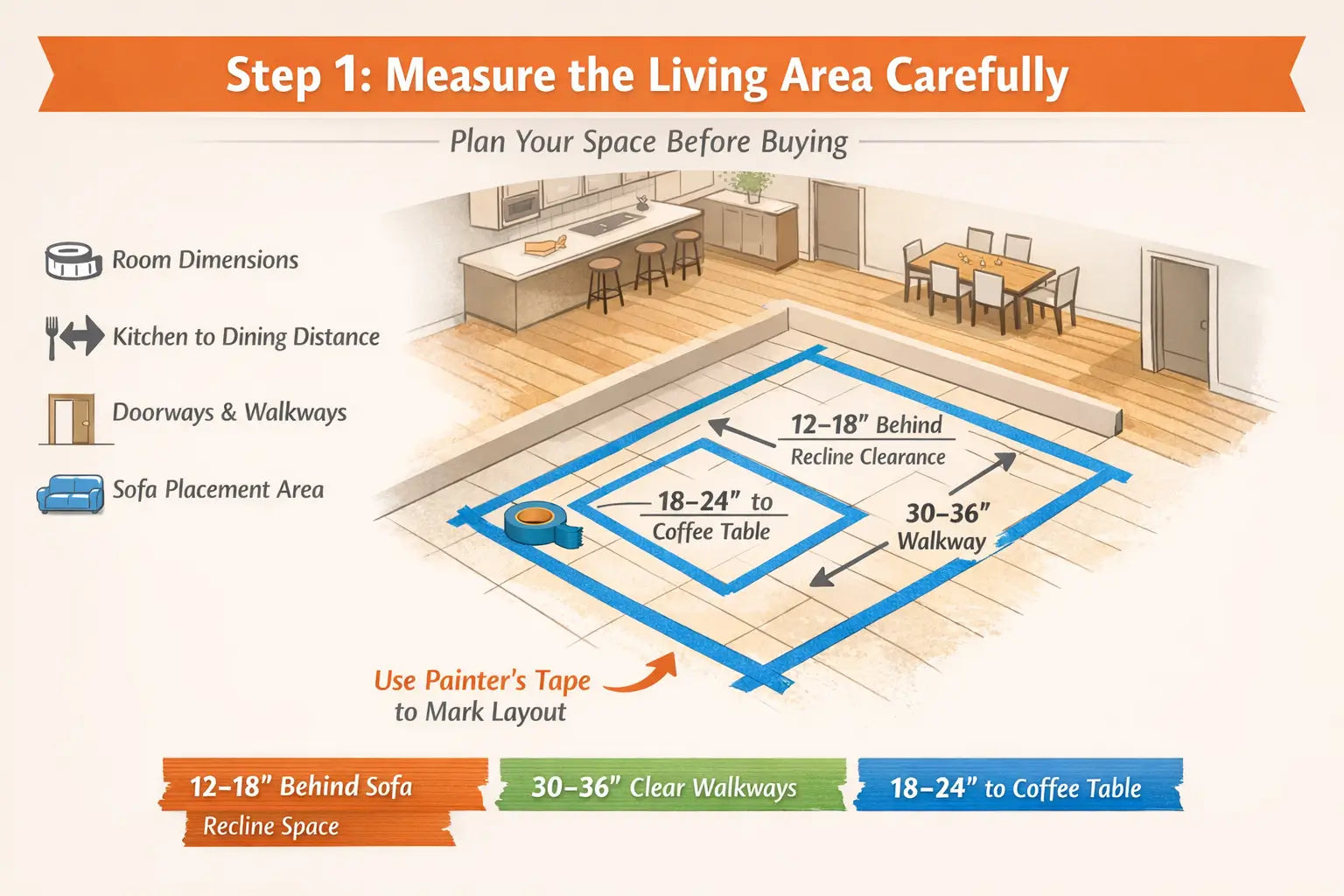
Step 1: Measure the Living Area Carefully
Before buying a reclining sectional, accurate measurements are essential.
Start by measuring:
- Total room length and width
- Distance between key areas such as kitchen and dining space
- Doorways and walkways
- The specific zone where the sectional will sit
When planning the layout, remember to include space for reclining.
Recommended spacing:
- 12-18 inches behind the sofa for reclining motion
- 30-36 inches for walkways
- 18-24 inches between the sofa and coffee table
A useful trick is to mark the sectional footprint with painter's tape on the floor. This helps you visualize the sofa size and test whether the layout feels comfortable.
Step 2: Define the Living Area Within the Open Space
In open-concept homes, furniture helps define zones.
A reclining sectional can act as a natural divider between living and dining areas when placed strategically.
Two common approaches work well.
Floating Layout
Instead of placing the sofa against a wall, position it in the center of the living zone facing the TV or focal wall.
Benefits include:
- Better reclining clearance
- Clear visual separation of spaces
- Balanced layout in large rooms
Sectional as a Space Divider
An L-shaped sectional can help define the edge of the living area.
For example:
Kitchen → Dining Table → Sectional → TV area
This layout keeps the living zone cozy while maintaining open flow.
Step 3: Choose the Right Sectional Shape
The shape of your reclining sectional plays a major role in how well it fits the room.
L-Shaped Reclining Sectionals
Best for most open-concept layouts.
Advantages:
- Defines a seating corner without walls
- Works well in medium and large rooms
- Maintains clear walkways
Chaise Sectionals
Good for smaller open layouts.
Advantages:
- Takes up less visual space
- Keeps the layout light and flexible
U-Shaped Reclining Sectionals
Best for very large open living areas.
Advantages:
- Creates a strong seating zone
- Ideal for large families or entertaining
However, these require significant floor space and may overwhelm smaller open rooms.
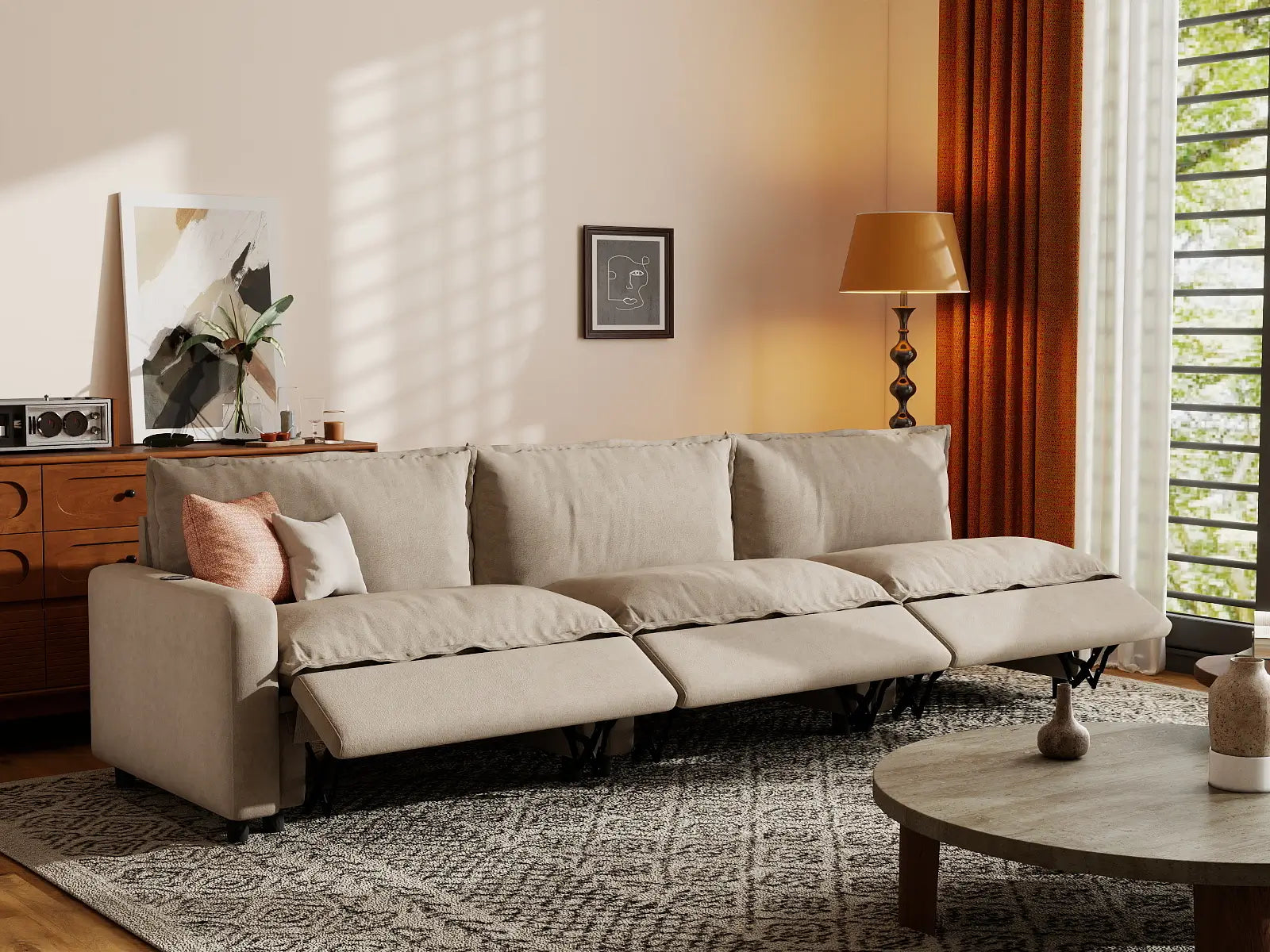
Step 4: Use Rugs and Furniture to Anchor the Layout
Because open-concept rooms lack walls, visual anchors become important.
Use an Area Rug
A large rug under the sectional helps define the living area.
Design rule:
The rug should be large enough for the front legs of the sectional to sit on it.
This visually groups the seating area and prevents the room from feeling scattered.
Balance With Other Furniture
To stabilize the layout, pair the sectional with:
- A coffee table
- Accent chairs
- A media console
These elements help create a complete living zone inside the open space.
Reclining Sectional Size Guide for Open-Concept Rooms
Not sure what size to get? Use this table as a simple guide.
| Room Size | Recommended Sectional Size | Shape to Consider |
| Small (under 200 sq ft) | 2-3 seat sectional | L-shape, compact |
| Medium (200-350 sq ft) | 3-4 seat sectional | L-shape or chaise |
| Large (350-500 sq ft) | 4-5 seat sectional | L-shape or U-shape |
| Very Large (500+ sq ft) | 5+ seat sectional | U-shape or curved |
If the room includes multiple zones, always size the sectional for the living area rather than the entire open space.
Conclusion
Fitting a reclining sectional in an open-concept living room is easier than you think. Just measure your space, plan your layout, float the sofa, use a rug, and choose the right size. Follow these steps and you will have a living room that looks great and feels even better.
If you are looking for a high-quality reclining sofa that fits your home perfectly, check out Magic Home. Magic Home offers a wide range of stylish and comfortable reclining sectionals that suit all kinds of spaces, including open-concept rooms. With Magic Home, you get great design, lasting comfort, and sofas built to fit your life.
Frequently Asked Questions (FAQ)
Most reclining sofas need about 12 to 18 inches of clear space behind them. Always check the product details before you buy.